Few assets carry the mystique of gold. For thousands of years, it has been considered the ultimate store of value — a hedge against war, inflation, and collapsing empires. Even in 2025, with Bitcoin, ETFs, and algorithm-driven funds dominating headlines, gold remains one of the world’s most trusted investments.
But as investors look toward 2026–2027, a key question arises: will gold continue to be the reliable safe haven it has historically been? Or is its role being diminished by digital assets, central bank policies, and a shifting global order?
Why Gold Has Always Been Seen as “Safe”
Before looking forward, it helps to recall why gold has earned its reputation:
- Scarcity and Tangibility: Gold cannot be printed like dollars or euros. It has limited supply, and unlike digital assets, it can be physically held.
- Universal Acceptance: Across cultures and centuries, gold has retained value. A bar of gold is as trusted in New York as it is in Beijing.
- Crisis Hedge: In wars, recessions, and currency collapses, investors have historically fled to gold.
- Central Bank Support: Even today, central banks collectively hold more than 35,000 tons of gold, reinforcing its credibility.
This long history doesn’t guarantee future performance — but it explains why investors instinctively return to gold when uncertainty rises.
Gold’s Performance in Recent Years
Between 2020 and 2025, gold has experienced both skepticism and renewed interest:
- 2020–2022: Pandemic and inflation fears pushed gold above $2,000/oz.
- 2023–2024: Despite Fed rate hikes, gold remained resilient, hovering in the $1,800–2,100 range.
- 2025: At around $3,400/oz mid-year, gold hit new highs, fueled by inflation concerns, central bank purchases (notably by China and emerging markets), and geopolitical instability.
The fact that gold rose despite higher interest rates — which usually hurt non-yielding assets — signals that its role as a safe haven remains strong.
Key Drivers for Gold in 2026–2027
- Global Geopolitical Tensions
Wars and conflicts have historically boosted gold. With U.S.–China relations uncertain, Middle East risks simmering, and debates over dollar dominance, gold stands to benefit. If global conflict expands, demand for physical assets like gold will rise.
- Central Bank Policies
Central banks remain net buyers of gold, with China, India, and Russia leading the way. Their motivation is diversification away from the U.S. dollar. As long as this trend continues, demand will provide a strong floor under gold prices.
- U.S. Dollar Trajectory
Gold often moves inversely to the U.S. dollar. If the dollar weakens in 2026–2027 due to fiscal deficits, rising debt, or political turmoil, gold is likely to rise. If the dollar strengthens, gold may consolidate but rarely collapses outright.
- Inflation and Real Interest Rates
- High inflation + low real yields → gold rallies.
- Falling inflation + rising real yields → gold faces pressure.
In 2026–2027, much depends on whether inflation stays sticky. Many analysts expect inflation to stabilize above pre-2020 levels, which favors gold.
- Bitcoin and Digital Assets
Some argue Bitcoin is the “new gold.” Yet, its volatility and regulatory uncertainty make it an imperfect replacement. Increasingly, many investors are treating Bitcoin as a complement to gold, not a substitute.
Will Gold Protect Against a Recession in 2026–2027?
The question isn’t only about inflation. Many investors worry about a global slowdown in the mid-2020s. Historically, gold has been mixed during recessions:
- In the 2008 crisis, gold initially dipped but then rallied strongly.
- In the 2020 pandemic crash, gold spiked as investors sought safety.
The pattern suggests: gold may not always rise immediately when markets fall, but over the medium term it tends to outperform when economic uncertainty lingers.
Comparing Gold to Other Safe Havens
To judge gold’s future role, it helps to compare it to alternatives:
| Asset | Strengths | Weaknesses | 2026–2027 Outlook |
| Gold | Tangible, historic safe haven, central bank support | No yield, storage costs | Strong if dollar weakens or conflicts rise |
| U.S. Treasuries | Government-backed, pays yield | Sensitive to rate hikes, inflation risk | Stable if Fed controls inflation |
| Bitcoin | Portable, finite supply, growing adoption | High volatility, regulatory risk | Possible “digital gold” but untested in crises |
| Cash | Liquid, stable in short term | Erodes with inflation | Useful but unsafe long-term |
| Swiss Franc/Japanese Yen | Historically safe currencies | Central banks can intervene | Limited upside, still paper-based |
👉 Conclusion: gold’s biggest advantage is that it doesn’t rely on promises from governments or central banks.
Potential Risks to Gold’s Safe Haven Role
While gold remains powerful, investors should be aware of challenges:
- High Opportunity Cost if Rates Stay High
If Treasuries yield 5%+ consistently, some investors may prefer income-generating assets over gold. - Technological Substitutes
If Bitcoin or other digital assets gain wider adoption as “crisis hedges,” some capital may shift away from gold. - Stability of the Dollar
If the U.S. maintains fiscal credibility and the dollar stays strong, gold’s role may look less urgent. - Market Manipulation Concerns
Futures markets and central bank interventions sometimes distort gold’s short-term performance.
Still, history shows gold rarely “fails” entirely in its safe-haven role — it may stagnate, but it does not collapse when investors seek security.
Price Outlook: Where Could Gold Be by 2027?
Analysts remain divided, but here are broad scenarios:
- Bullish Case: Inflation persists, dollar weakens, geopolitical risks rise → gold climbs to $4,000–5,000/oz.
- Base Case: Moderate inflation, mixed dollar, stable but cautious environment → gold ranges $3,200–3,800/oz.
- Bearish Case: Inflation drops sharply, dollar strengthens, global calm → gold falls back toward $2,500–2,800/oz.
Even in the bearish case, gold remains higher than its 2010s average (~$1,200–1,500), showing its long-term upward trend.
How to Use Gold in a 2026–2027 Portfolio
Owning gold does not mean going “all in.” Instead, gold works best as a diversifier:
- 5–10% allocation: for conservative investors.
- 10–15% allocation: for those highly concerned about inflation or geopolitical risks.
- 20%+ allocation: rarely recommended, as it exposes you to price stagnation.
Ways to own gold:
- Physical bullion/coins: Tangible, but requires secure storage.
- ETFs (GLD, IAU): Easy liquidity, no physical handling.
- Mining stocks: More volatile, but potential for higher returns.
- Gold-backed digital tokens: Emerging option, but still niche.
Final Verdict: Will Gold Remain a Safe Haven?
Yes — in 2026–2027, gold will almost certainly retain its role as a safe haven.
- If inflation stays elevated → gold protects purchasing power.
- If geopolitical risks escalate → gold provides security.
- If the dollar weakens → gold strengthens as an alternative store of value.
While Bitcoin and Treasuries offer competing claims, neither fully displaces gold’s unique position as both a psychological and practical hedge.
For investors, the question isn’t whether gold is still a safe haven — it is. The real question is how much gold to hold relative to other assets.
Looking Beyond 2027
Gold’s ultimate value may lie not in chasing price targets but in providing portfolio stability when everything else is uncertain. As the world navigates debt crises, shifting power blocs, and emerging technologies, gold remains the one asset with a track record measured not in decades, but in millennia.
For that reason, in 2026–2027 and beyond, gold is unlikely to lose its shine as the safe haven of last resort.
Historical Case Studies: Gold in Past Crises
To understand whether gold will continue serving as a safe haven in 2026–2027, it’s worth reviewing how it performed in previous periods of turmoil.
- 1970s Inflation Era
- U.S. inflation surged above 10% in the late 1970s.
- Gold skyrocketed from $35/oz in 1971 (end of Bretton Woods) to over $800/oz by 1980.
- Lesson: Gold thrives when fiat currencies lose purchasing power.
- 2000–2002 Dot-Com Bust
- Stocks collapsed, but gold quietly rose from ~$270 to ~$340/oz.
- Lesson: Gold can outperform equities even in “non-inflationary” recessions.
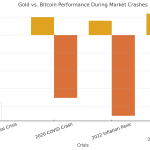
- 2008 Financial Crisis
- Gold dipped briefly during the panic (liquidity squeeze) but then surged from ~$700 to ~$1,900 by 2011.
- Lesson: In severe crises, gold is not immune to volatility but ultimately recovers strongly.
- 2020 Pandemic Crash
- Equities plunged, but gold rose above $2,000 as investors sought safety.
- Lesson: Gold provides psychological and financial protection during sudden global shocks.
👉 Across history, gold’s pattern is clear: it may not always rise immediately, but it eventually becomes the refuge when confidence in other assets erodes.
Gold vs Bitcoin: Companions or Competitors?
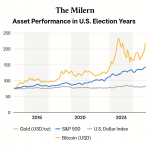
One of the biggest debates for 2026–2027 is whether Bitcoin could displace gold as the preferred safe haven.
- Bitcoin’s strengths: portability, finite supply (21 million cap), and growing institutional adoption.
- Bitcoin’s weaknesses: extreme volatility (50% drawdowns still common), regulatory uncertainty, and short track record compared to gold.
Increasingly, investors are treating the two as complements:
- Gold as the stable, historical hedge.
- Bitcoin as the speculative, asymmetric bet.
This means gold’s safe-haven status isn’t being erased — it’s being supplemented by digital assets.
Central Banks: The Quiet Gold Buyers
One of the strongest signals supporting gold’s safe-haven role is central bank behavior.
- In 2022–2025, central banks purchased record amounts of gold, led by China, Turkey, India, and Russia.
- Their motivation: reduce reliance on the U.S. dollar as sanctions and debt levels raise concerns about dollar dominance.
- By 2025, central banks controlled over 20% of all above-ground gold, a figure that has been climbing steadily.
This institutional demand provides a hard floor for gold prices. Even if retail investors hesitate, central banks are unlikely to stop accumulating gold in 2026–2027.
Practical Portfolio Scenarios for 2026–2027
How much gold should investors hold? Let’s explore practical allocations for different risk profiles.
Conservative Retiree (Age 65+)
- 5–10% gold via ETFs or physical coins.
- Main goal: stability, not speculation.
- Gold balances equity downturns while bonds provide income.
Balanced Investor (Age 40–55)
- 10–15% gold split between physical and ETFs.
- Purpose: hedge inflation and geopolitical risk.
- Still maintains 50%+ equities for growth.
Aggressive Hedge-Seeker (All Ages)
- 15–20% gold, possibly with exposure to silver and mining stocks.
- Views gold as a core safe-haven, especially if worried about dollar collapse or systemic crises.
- Accepts the opportunity cost if equities outperform.
Gold and the U.S. Dollar: A Tied Future
The relationship between gold and the U.S. dollar will shape gold’s role through 2026–2027.
- If the dollar weakens due to deficits and debt, gold strengthens as the alternative.
- If the dollar remains strong, gold may plateau — but its downside is limited compared to riskier assets.
- Global diversification trend: even if the dollar holds, countries hedging their reserves with gold ensures steady demand.
Will Gold Keep Up with Inflation?
A common critique is that gold sometimes fails to match inflation perfectly. For instance, from 1980 to 2000, gold underperformed while inflation was moderate.
But inflation dynamics are different today:
- Global debt levels are much higher.
- Central banks are more aggressive in money printing.
- Inflation spikes (like 2021–2023) can appear suddenly and persist.
For investors in 2026–2027, gold’s role is less about beating inflation month-to-month and more about preserving long-term purchasing power across decades.
Case for Gold in 2026–2027: A Multi-Scenario Hedge
- Inflation Remains Sticky → Gold outperforms as purchasing power declines.
- Deflation or Recession → Gold holds steady while equities fall, preserving value.
- Geopolitical Crisis → Gold spikes as the ultimate safe asset.
- Dollar Weakness → Gold strengthens as the reserve diversification asset of choice.
- Calm Markets → Gold may stagnate, but even then it provides non-correlated balance.
- Gold as a Safe Haven in 2026–2027: Scenario Outlook
| Scenario | Likely Market Conditions | Gold’s Expected Role | Investor Takeaway |
| Persistent Inflation | Prices stay elevated, real yields low | Gold rises to protect purchasing power | Maintain or increase allocation (10–15%) |
| Deflation / Recession | Falling prices, equities weaken | Gold holds steady, outperforms risk assets | Use gold as a stabilizer in downturns |
| Geopolitical Crisis | Conflict, war, sanctions, instability | Gold spikes as ultimate safe asset | Safe haven demand could push prices toward $4,000+ |
| Dollar Weakness | U.S. debt, deficits weaken confidence | Gold strengthens as alternative store of value | Strong central bank and global investor demand |
| Calm, Stable Markets | Low inflation, strong dollar, stable growth | Gold stagnates or consolidates | Keep a modest allocation as portfolio insurance |
Investor Takeaway: A Hedge, Not a Silver Bullet
Gold should not be seen as the answer to every financial problem. It does not produce income, it requires storage or ETF costs, and it can stagnate for years.
But in a world of:
- record-high debt,
- geopolitical instability, and
- rising doubts about fiat currencies,
gold continues to shine as the insurance policy every portfolio needs.
The optimal question for 2026–2027 is not whether gold is still a safe haven — it is. The real question is how much to allocate given your risk profile and financial goals.
Final Thoughts
Gold has survived centuries of wars, hyperinflations, and economic collapses. It is not going away in 2026–2027.
- For retirees and conservative investors → gold ensures peace of mind.
- For balanced investors → gold reduces volatility and protects during crises.
- For aggressive hedge-seekers → gold remains the backbone of wealth insurance.
As Bitcoin and other assets rise, gold’s role evolves — but it does not disappear. In a world where uncertainty is rising, gold remains what it has always been: the safe haven of last resort.