As the world edges closer to major elections in 2026, from the United States to the EU and beyond, one critical question is on the minds of investors:
How should I allocate my money during a politically volatile year?
Election cycles often stir markets. Political uncertainty can shift interest rates, taxes, regulation, and global diplomacy — all of which directly affect asset prices.
In this article, we’ll explore how to position your portfolio ahead of the 2026 election year by comparing four key assets: stocks, gold, crypto, and cash.
Why Election Years Matter for Investors
Markets don’t operate in a vacuum. When voters head to the polls, the stakes are high for fiscal policy, global trade, defense spending, and regulation. Historically, election cycles tend to create more market volatility, especially in the months leading up to the vote.
Here’s what history tells us:
- Stocks often dip before elections due to uncertainty, but rally post-election once the outcome is known.
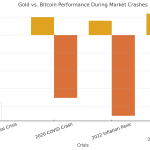
- Gold tends to gain when political risk rises or inflation becomes a key campaign issue.
- Crypto can behave like a risk-on asset but also reacts to regulation and monetary policy signals.
- Cash becomes attractive when investors want to sit on the sidelines until the dust settles.
But 2026 isn’t just another election year. It’s shaping up to be a geopolitical pressure point, with more voters than ever casting ballots globally — and deeper divisions across major economies.
Let’s examine each asset class more closely.
1. Stocks in an Election Year
Performance history:
- The S&P 500 has posted positive returns in 19 of the past 23 U.S. election years (since 1928).
- However, pre-election months (Q2–Q3) tend to show lower returns and more volatility as markets price in political uncertainty.
- Stocks often rebound after the election, especially when there’s a clear result.
2026 Considerations:
- With likely changes in U.S. tax policy and potential shifts in energy or defense spending, some sectors could swing dramatically.
- Healthcare, defense, and clean energy often become election battlegrounds, creating both risks and opportunities.
- Expect sharp moves in sectors tied to campaign promises or geopolitical friction.
How to position:
- Consider sector ETFs that align with both conservative and progressive policy paths.
- Maintain some exposure to broad-market indices but hedge with volatility tools like inverse ETFs or options if you’re active.
- Focus on dividend-paying stocks or value names with strong fundamentals — they often hold up better in turbulent cycles.
2. Gold in an Election Year: Real Safety or Hype?
Gold has long been viewed as the classic hedge during times of political uncertainty, inflation, or global conflict. Election years — especially polarized ones like 2026 — tend to revive interest in gold for precisely those reasons.
Historical Performance:
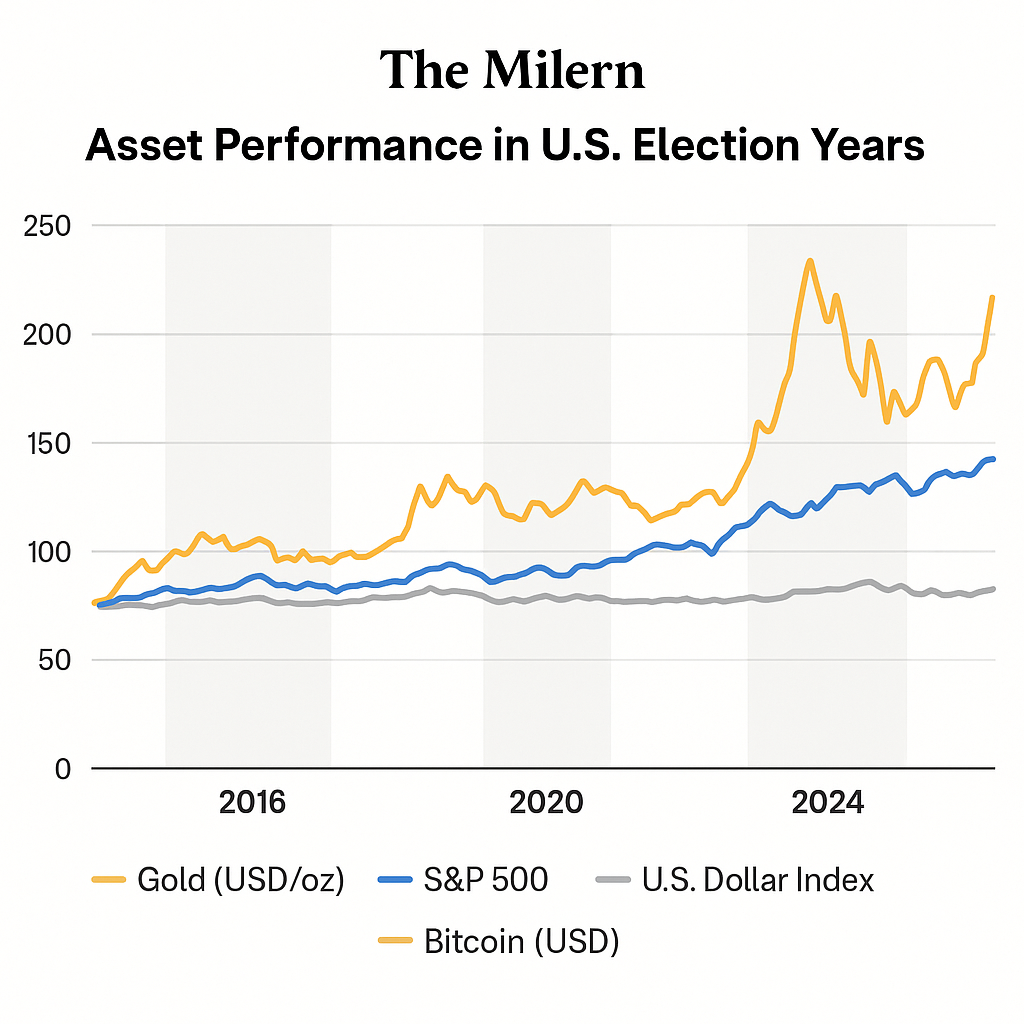
- During U.S. election years, gold has averaged positive returns, particularly when the election is closely contested or there’s geopolitical tension.
- In 2020, amid the pandemic and political division, gold surged over 25%.
- In 2016 and 2012, gold showed more muted movement but still held up against market swings.
Why Gold Matters in 2026:
- Inflation remains sticky in many economies, keeping gold attractive.
- Geopolitical tensions (Ukraine, Taiwan, Middle East) could worsen — a scenario where gold shines.
- Central banks globally are accumulating record levels of gold reserves, showing long-term faith in it over fiat currencies.
Pros and Cons:
✅ Pros:
- Safe haven during election or geopolitical instability
- Low correlation to stocks
- Physical or ETF forms available
❌ Cons:
- Doesn’t generate yield or dividends
- Can underperform when interest rates rise
- Short-term pullbacks if post-election optimism returns
Smart Moves:
- Allocate 5–10% of your portfolio to gold or gold ETFs if you’re seeking a hedge.
- Consider gold miners if you want equity exposure with gold leverage.
- Use gold to balance riskier holdings like growth stocks or crypto.
3. Crypto in an Election Year: Risky or Revolutionary?
Cryptocurrencies like Bitcoin, Ethereum, Solana, and others now have a growing presence in mainstream portfolios — but they also face regulatory and policy risk, especially in election cycles.
What to Expect in 2026:
- In the U.S. and EU, crypto regulation is a hot-button issue. Candidates’ stances could move markets.
- The 2026 election could determine whether crypto sees friendly frameworks or hostile crackdowns.
- If central banks start rolling out CBDCs (central bank digital currencies), investor interest in decentralized coins may rise — or fall, depending on how they’re marketed.
Market Behavior:
- Crypto is more volatile than any other asset class discussed here.
- It often trades like high-beta tech stocks, responding to liquidity and interest rate changes.
- Political shifts that affect the Federal Reserve or SEC indirectly influence crypto prices.
Best Practices for 2026:
- Keep allocations to crypto small and strategic (1–5%).
- Focus on Bitcoin and Ethereum, which have the most institutional resilience.
- Use crypto ETFs if you’re worried about self-custody or security risks.
Reminder: Crypto can soar or crash 20% in a week based on a single regulatory headline. Know your risk tolerance.
4. Holding Cash in 2026: Wise Caution or Missed Opportunity?
In uncertain times, cash feels safe. And in an election year like 2026—especially one potentially shaped by volatile policies, rate changes, and market jitters—many investors may feel tempted to hold a larger portion of their wealth in cash.
But is that a good idea?
The Case For Cash:
- Liquidity: Cash lets you stay nimble and respond quickly to opportunities or downturns.
- Reduced Volatility: It shields your portfolio from wild market swings or political shocks.
- Higher Yields (for now): With interest rates still elevated in mid-2025, money market funds and high-yield savings accounts offer respectable returns (4–5% in some regions).
The Case Against Cash:
- Inflation Risk: Even modest inflation (3–4%) can erode purchasing power quickly—especially over 12–24 months.
- Opportunity Cost: Sitting on cash during a bull run means missing out on compounding returns.
- Market Timing Fallacy: Most investors don’t re-enter at the right time and end up worse off.
How to Hold Cash Wisely in 2026:
- Keep 3–6 months of living expenses in true emergency savings.
- Allocate a small tactical portion (5–10%) for optionality in uncertain times.
- Consider laddered short-term Treasury bills or money market funds as safer, yield-generating alternatives to checking accounts.
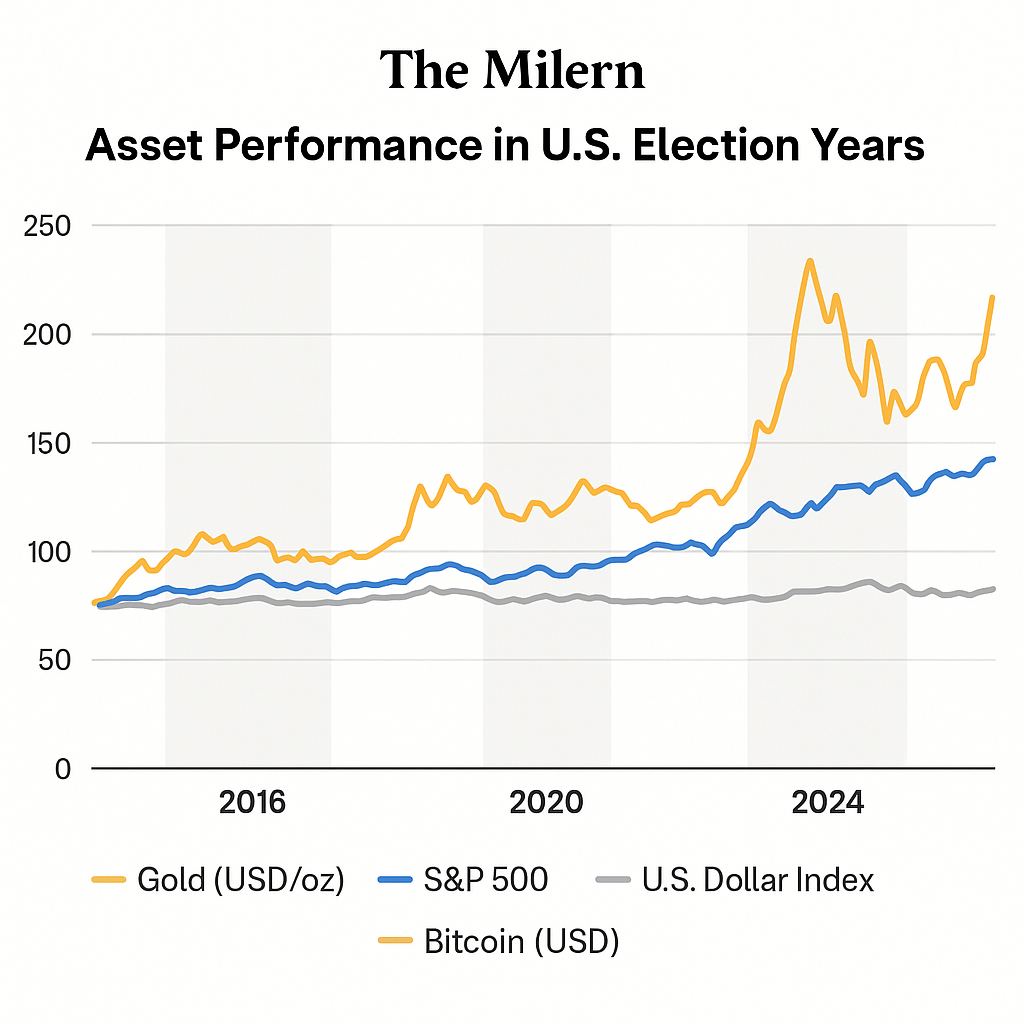
Cash isn’t a growth asset—it’s a parking spot. In a chaotic election year, it can serve as a temporary stabilizer, but shouldn’t be your long-term anchor. Here is why cash may still be store of value in 2025-2026.
5. Bonds in 2026: Back from the Dead?
After a decade of ultra-low yields and a brutal rout in 2022–2023, bonds finally look interesting again in 2026. Yields are elevated, inflation is moderating, and rate cuts may be on the horizon depending on election outcomes and central bank reactions.
But the big question is: Are bonds safe again—or still too risky for investors in 2026?
Why Bonds Might Shine in 2026:
- Higher Starting Yields: U.S. Treasuries and high-grade corporate bonds now offer 4–6%, a meaningful real return after years of sub-2%.
- Rate Cuts Potential: If inflation continues falling or a recession begins, rate cuts could drive bond prices up—creating capital gains for holders.
- Rebalanced Portfolios: Many 60/40 and retirement portfolios are rotating back into bonds for income and risk control.
The Risks Still Linger:
- Policy Shocks: A surprise election result or major policy shift could rattle bond markets—especially if fiscal discipline weakens.
- Sticky Inflation: If inflation proves stubborn, rates may stay high longer, hurting long-duration bonds.
- Geopolitical Events: War, sanctions, or trade disruptions can send bond yields spiking (and prices falling), especially in emerging markets.
Bond Strategy Tips for 2026:
- Favor Short-to-Mid Duration: These are less sensitive to rate swings and offer decent yields.
- Use Bond ETFs or Mutual Funds to diversify and manage reinvestment risk.
- Consider TIPS (Treasury Inflation-Protected Securities): If inflation uncertainty is high, these can protect purchasing power.
Bonds are no longer dead weight in portfolios—but they aren’t risk-free either. Choose duration carefully and avoid going all-in unless your risk tolerance and time horizon align.
What History Tells Us About Elections and Markets
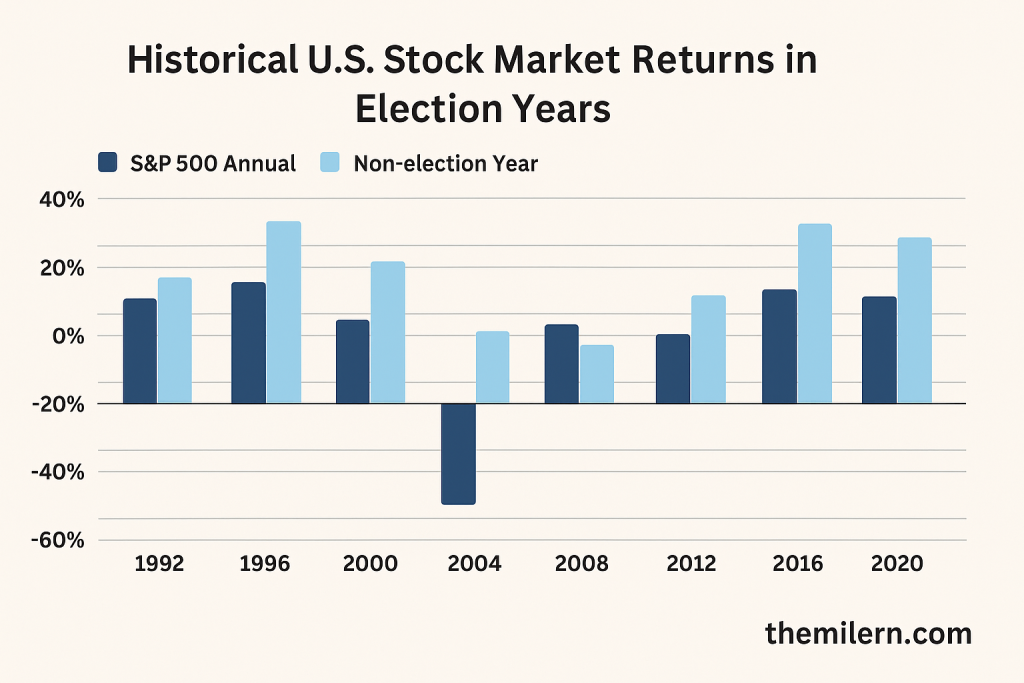
While every election is different, history offers useful clues about how various assets behave in politically charged years. Here’s what we’ve seen across past U.S. midterms and presidential cycles:
Stocks Tend to Dip Before Elections—Then Rally
Uncertainty leading up to an election often causes market jitters. But once the results are known—even if controversial—markets typically bounce back due to clarity and reorientation of expectations.
- In 2020, the S&P 500 dropped ahead of the vote but surged afterward.
- In 2016, markets initially fell on Trump’s surprise victory, then soared on expected tax cuts and deregulation.
- Historically, the 12 months after an election often show above-average returns—regardless of who wins.
Gold Often Gains During Political Stress
Gold has historically acted as a hedge against election chaos, particularly when:
- There’s fear of civil unrest or contested results
- Inflation expectations rise
- The U.S. dollar weakens due to fiscal uncertainty
In 2020, gold hit all-time highs amid pandemic chaos and election fears. In 2012 and 2008, gold also outperformed during uncertainty.
Bonds Respond to Policy Signals
Bond markets care less about the personalities running and more about policy implications:
- A government favoring stimulus and borrowing can cause yields to rise (hurting bonds).
- A focus on deficit control and slow growth tends to lower yields (boosting bond prices).
The 2026 outcome could heavily influence Treasury yields, depending on fiscal signals from Congress and the White House.
Crypto Reacts to Regulation, Not Just Rhetoric
Bitcoin and Ethereum have grown sensitive to political developments:
- Promises of clearer crypto regulation tend to lift prices.
- Threats of bans, crackdowns, or taxation weigh heavily.
The 2024 and 2025 cycles saw crypto lurch with every SEC comment or stablecoin bill. Expect high volatility in crypto markets around 2026 debates on digital assets, CBDCs, and crypto taxation.
Final Thoughts: Navigating 2026 with a Smart, Election-Proof Portfolio
The 2026 U.S. election cycle—and broader geopolitical instability—makes this one of the most complex investing years in recent memory. Markets will move on:
- Fiscal policy proposals
- Fed rate decisions
- Regulatory changes for tech and crypto
- Global tensions and economic slowdowns
But the core principles still apply:
✅ Diversify across uncorrelated assets (stocks, gold, bonds, crypto, cash)
✅ Trim risk when volatility surges, but don’t panic sell
✅ Focus on long-term megatrends, not just election noise
✅ Keep an eye on inflation and global macro factors
The best 2026 portfolios won’t try to time every twist and turn. Instead, they’ll be built to endure surprises and capture opportunity when the dust settles.