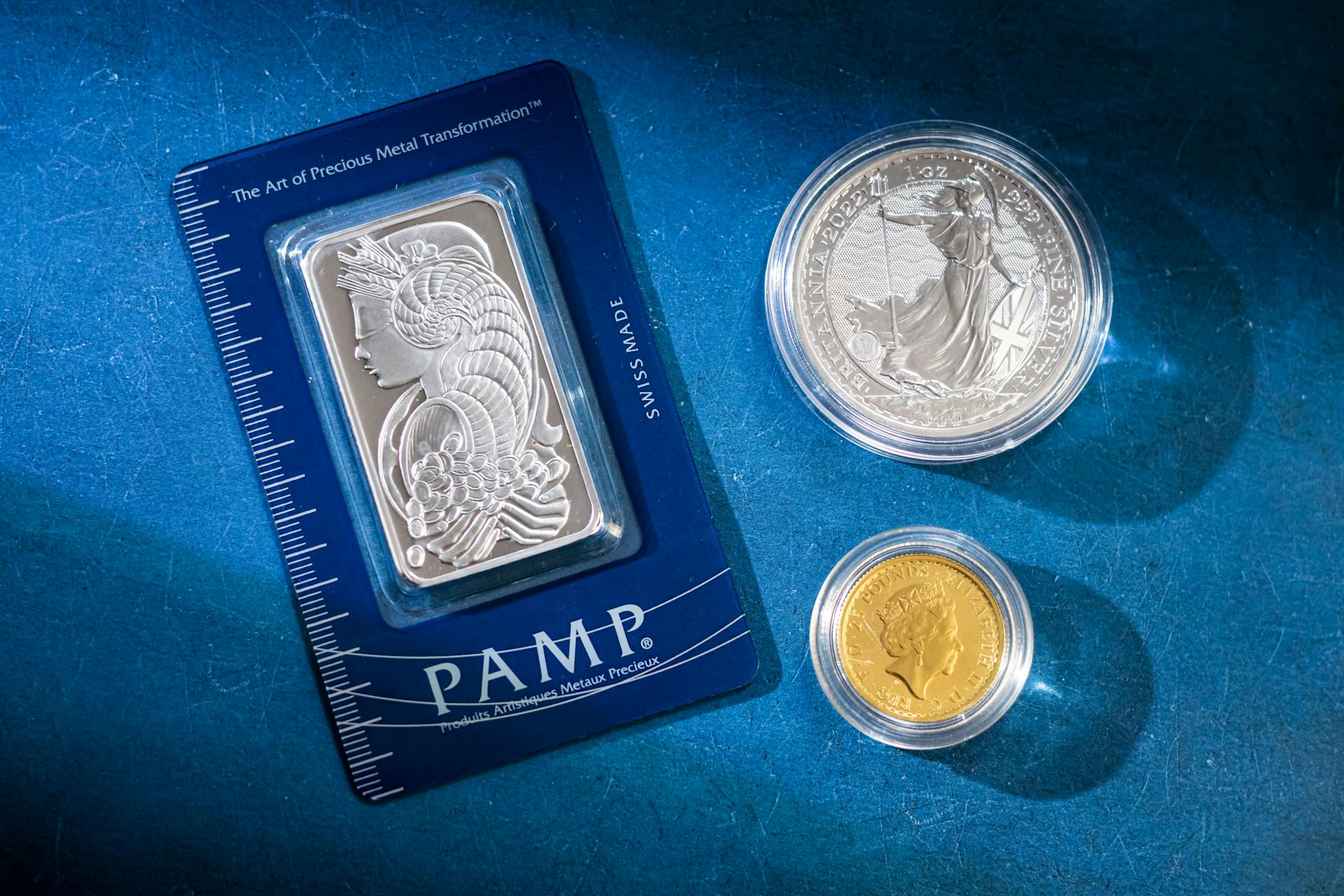
Silver
For decades, silver has played second fiddle to gold. Often called “the poor man’s gold,” it’s cheaper, more volatile, and less hoarded by central banks. But in times of financial stress, rising inflation, or currency uncertainty, silver starts to shine — sometimes even brighter than gold.
As of 2025, with inflation still sticky, geopolitical risks elevated, and precious metals demand climbing, many investors are asking:
Will silver finally outperform gold in the next market cycle?
In this article, we’ll explore:
- How silver and gold performed during recent inflationary cycles
- Why silver’s industrial role is both a risk and an opportunity
- Whether silver is undervalued relative to gold — and what that could mean
- The best ways to invest in silver in 2025–2026
- Whether it’s time to overweight silver for asymmetric upside
Let’s start by looking at recent performance.
Gold vs. Silver: Performance in the 2020s So Far
Precious metals often move together — but not equally. Gold tends to move first during crises as a flight-to-safety asset, while silver lags… and then often outpaces gold during bullish reversals.
| Year | Gold Price (Avg) | Silver Price (Avg) | Gold/Silver Ratio | Commentary |
|---|---|---|---|---|
| 2020 | $1,770 | $20.55 | ~86:1 | COVID panic — gold up, silver spikes late |
| 2021 | $1,798 | $25.14 | ~72:1 | Silver outperformed |
| 2022 | $1,800 | $21.73 | ~82:1 | Hawkish Fed pressured both metals |
| 2023 | $1,940 | $23.24 | ~83:1 | Gold surged, silver lagged |
| 2024 (est.) | $2,280 | $27.00 | ~84:1 | Gold broke ATH, silver followed slowly |
| 2025 (YTD) | $2,360 | $29.50 | ~80:1 | Silver catching up… slowly |
The historical average gold/silver ratio is ~55–65. A current ratio near 80–85 suggests that silver may be undervalued relative to gold.
Silver’s Superpower: Industrial Demand + Monetary Heritage
What makes silver so unique — and often misunderstood — is that it straddles two worlds: it’s both a precious metal and an industrial commodity.
🏛 As a Monetary Metal:
Silver has been used as money for over 2,000 years, alongside or even ahead of gold in some eras. Though it’s no longer in circulation, silver remains a hedge against currency devaluation, debt crises, and inflation.
Investors buy physical silver coins and bars, or ETFs like SLV or PHYS, for many of the same reasons they buy gold:
- Store of value in uncertain times
- Hedge against fiat currency debasement
- Tangible, scarce, and outside the banking system
⚙ As an Industrial Metal:
Unlike gold, silver has real-world applications that are surging due to new technologies. In fact, more than 50% of global silver demand is now industrial.
Key growth drivers:
- Solar panels (PV cells use silver paste — silver demand in solar hit record highs in 2023–2025)
- Electric vehicles (EVs) – batteries, wiring, and components
- 5G tech and semiconductor manufacturing
- Antibacterial applications in medicine and textiles
Silver is critical to the green energy transition. The more the world electrifies, the more silver it consumes — and unlike gold, it gets used up.
This gives silver a dual price engine: monetary demand when fear rises, and industrial demand when growth resumes.
But that dual nature also introduces complexity…
Volatility Is a Feature, Not a Bug: How Silver Behaves in Bull and Bear Markets
If gold is the patient long-distance runner of the commodity world, silver is the sprinter — fast, aggressive, and exhausting.
Silver is known for its sharp rallies and brutal corrections. It can gain 30–40% in a matter of weeks… and give it all back just as fast.
Let’s look at historical examples:
🏁 Bull Market Surges
- 2010–2011: Silver surged from ~$18 to nearly $50/oz in just 12 months — outperforming gold by a wide margin
- 2020 (Pandemic Panic): Silver fell below $12… then soared to over $29 in five months — a 140% gain
- 2024–2025: Silver rose from ~$21 in late 2023 to ~$29.50 mid-2025 — still lagging gold, but gaining momentum
🛑 Violent Pullbacks
- 2011–2015: Silver crashed over 70% from peak as QE fear faded and the dollar strengthened
- 2016–2018: A 30% rally gave way to a slow bleed back to $14
- 2022: Fed tightening triggered a ~20% drop in under three months
What This Means for Investors
- Silver is not a “buy and forget” asset like gold — it requires timing or long-term conviction
- In bull markets, it often outpaces gold dramatically — making it attractive for high-beta exposure
- In bear markets, it underperforms almost everything — including gold and even the S&P 500
For traders: silver is a volatility tool.
For long-term holders: silver requires patience and position sizing.
Is Silver Undervalued in 2025? Let’s Talk Gold/Silver Ratio and Fundamentals
One of the most widely used tools to evaluate silver’s relative value is the gold-to-silver ratio — the number of ounces of silver it takes to buy one ounce of gold.
Historically, this ratio has averaged between 55:1 and 65:1. When it moves far outside that range, investors take notice.
📊 Gold/Silver Ratio Snapshot (Selected Years)
| Year | Gold Price | Silver Price | G/S Ratio | Commentary |
|---|---|---|---|---|
| 1980 | ~$850 | ~$50 | ~17:1 | Silver peak — Hunt Brothers spike |
| 2000 | ~$280 | ~$4.95 | ~56:1 | Normal range |
| 2011 | ~$1,900 | ~$49 | ~39:1 | Silver rallies hard |
| 2020 | ~$2,000 | ~$12 | ~125:1 | Pandemic panic — record divergence |
| 2025 | ~$2,360 | ~$29.50 | ~80:1 | Still historically high |
At a ratio of ~80:1, silver remains historically cheap relative to gold — even after strong recent gains.
Why This Matters
- When the ratio drops below 70:1, silver often outperforms gold
- If silver were to return to 60:1 at current gold prices (~$2,360), it would imply a silver price of ~$39 — a 30%+ upside from today
Of course, silver doesn’t move in a straight line. But the risk–reward ratio is shifting — and many contrarian investors are starting to notice.
How to Invest in Silver in 2025–2026: Smart Tools and Strategies
Once you’re convinced silver deserves a place in your portfolio — the next step is deciding how to gain exposure. Unlike gold, silver comes with a wider range of volatility, cost, and storage considerations.
Here are the main methods available in 2025–2026:
🪙 1. Physical Silver (Coins and Bars)
- Pros:
- No counterparty risk
- Private and portable
- Long-term store of value
- Cons:
- Premiums can be high (especially in retail market)
- Storage and insurance costs
- Liquidity can be slower than digital assets
Best for: Long-term holders who want a tangible hedge or distrust paper markets.
Popular choices:
- American Silver Eagles
- Canadian Maple Leafs
- 10oz or 100oz bars (for lower premiums)
📈 2. Silver ETFs (e.g., SLV, SIVR, PHYS)
- Pros:
- Liquid and easy to trade
- Tracks spot price
- No storage concerns
- Cons:
- Paper claims on silver, not direct ownership
- Subject to management fees and custodial risks
Best for: Passive investors or traders seeking short-term exposure to price action.
⛏ 3. Silver Mining Stocks and ETFs
- Pros:
- Leverage to silver price (often 2–3× moves)
- Potential for dividends or growth
- Cons:
- High volatility
- Subject to company-specific risks, not just silver price
Best for: Speculative investors seeking higher risk/reward.
Popular ETFs:
- SIL – Global silver miners
- SILJ – Junior silver miners
🧠 4. Silver Futures and Options
- Pros:
- High leverage potential
- Useful for short-term speculation or hedging
- Cons:
- Complex and risky
- Requires margin and experience
Best for: Professional or experienced traders only.
Each method has a place — and smart investors often combine approaches. For example, a core holding in physical silver, a trading position in SLV, and a small bet on miners can diversify exposure.
Will Silver Outperform Gold by 2026? Our Bottom-Line Outlook
If you’re looking for asymmetric upside in the precious metals space, silver is hard to ignore.
While gold has already broken out to new all-time highs above $2,350 in 2025, silver is still well below its 2011 peak near $50, suggesting significant potential if the bull cycle strengthens.
Let’s break it down:
🚀 Why Silver Could Outperform
- Undervaluation: The gold/silver ratio remains elevated (~80:1), suggesting silver has catching up to do
- Industrial demand: The green energy transition, EV adoption, and solar infrastructure continue to grow — all silver-intensive
- Monetary demand revival: In times of inflation, war, or recession, silver reclaims its role as a store of value
- Retail interest rising: Millennials and Gen Z are increasingly turning to silver due to its affordability and digital accessibility (ETFs, apps)
🐢 Why Gold May Still Lead
- Central bank buying: Central banks are buying gold, not silver, as a reserve
- Stability: Gold tends to hold its value better in downturns — silver is more volatile
- Liquidity: Gold markets are deeper and more liquid for institutional flows
Our View
| Asset | Outlook (2025–2026) | Risk | Potential Upside |
|---|---|---|---|
| Gold | Moderately bullish | Low–Med | +10–20% |
| Silver | Bullish | High | +30–60% |
Silver is the high-beta play on gold. If you believe gold will rise, silver could multiply those gains — but with more volatility.
For investors seeking leverage to the metals rally, a measured allocation to silver makes sense in 2025–2026 — especially with smart entry points and a long-term horizon.
Final Thoughts — Should You Overweight Silver Now?
Silver has long lived in the shadow of gold — but 2025 may mark a turning point. With a unique dual identity as both an industrial powerhouse and a historical store of value, silver offers something few other assets can: broad exposure to both growth and crisis.
The world is changing fast. We’re seeing:
- Rising geopolitical instability
- Central banks de-dollarizing (but not yet desilverizing)
- A boom in solar, EV, and green infrastructure spending
- Lingering inflation that refuses to fade quietly
In this environment, gold has already broken out to new highs. Silver, on the other hand, is still playing catch-up — and that’s where the opportunity lies.
If silver were to merely return to its 2011 highs, that would represent a 60–70% gain from current prices. A move back to a gold/silver ratio of 60:1 could take silver near $40 or beyond, especially if gold holds its gains above $2,300.
Of course, silver is not for the faint of heart. Its volatility can shake out even seasoned investors. That’s why position sizing and strategy matter.
Here’s a smart approach for 2025–2026:
- Hold physical silver as a long-term hedge
- Use ETFs for tactical exposure or liquidity
- Allocate a small, speculative position to miners for upside
- Avoid overexposure — especially in margin accounts or leveraged products
Silver is not a guarantee — but it is a compelling asymmetric bet in a world that’s rapidly redefining value, currency, and trust.
In a diversified portfolio, even a 5–10% allocation to silver could be enough to capture outsized gains if the next phase of the precious metals cycle takes off.
The smart money isn’t betting everything on silver — but it’s no longer ignoring it either.