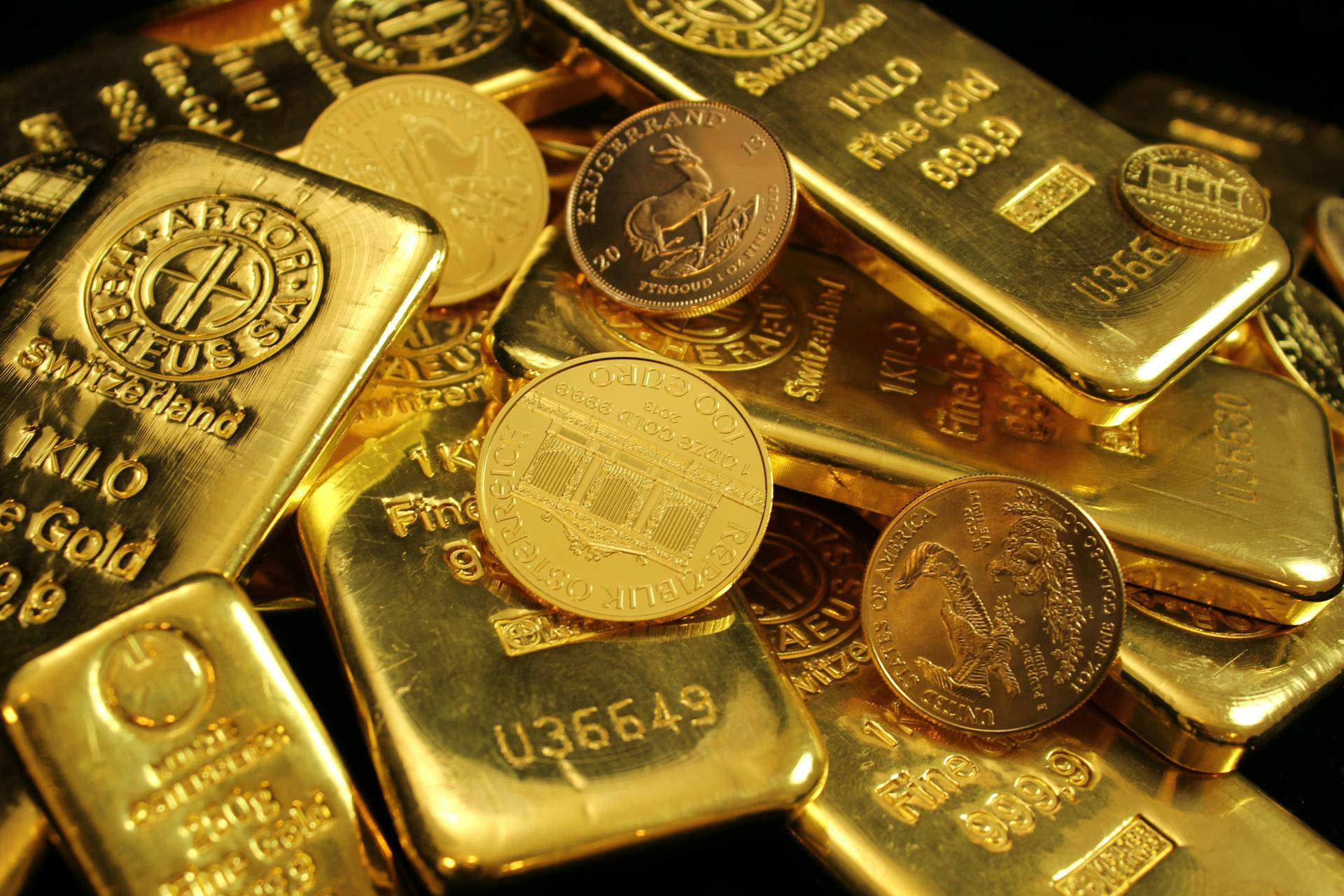
Below is a narrative-style deep-dive on gold, reflecting real-time events as of June 17, 2025, with forecast through year-end. It tells the story of gold’s journey amid global turmoil—designed to engage investors and blog readers alike.
On the morning of June 13, 2025, news broke that Israeli forces had launched precision airstrikes deep into Iranian territory. Satellite imagery and official statements revealed coordinated drone sabotage and bomb runs on key nuclear sites near Natanz—part of Operation Rising Lion orchestrated by Mossad and the Israeli Air Force goldpriceforecast.com+6jpmorgan.com+6timesofindia.indiatimes.com+6en.wikipedia.org+2en.wikipedia.org+2en.wikipedia.org+2. Markets reeled. Oil surged over 7–11% within hours, erasing months of price declines, as traders feared choke-points like the Strait of Hormuz could be compromised .
Yet it wasn’t just oil that spiked. Investors surged into gold—spot gold, traded near $3,400/oz, leapt by more than 1%. Futures followed suit, and bullion quickly reclaimed a position as the definitive flight-to-safety asset dailyforex.com+15theguardian.com+15reuters.com+15.
Fear, Flight, and the New Geopolitical Premium
Fear is a currency of its own. In late 2024 and early 2025, gold was already on a solid uptrend—from $3,100 to $3,400—driven by inflation, trade tensions, and wary central bankers . But when Israel’s operation struck at Iran’s heartland, it flipped a switch. Suddenly, gold carried a geopolitical risk premium—a buffer against war.
In the weeks since, that premium has resonated with every economic release, every ceasefire rumor. A momentary dip on June 16—as markets tentatively welcomed signs that Iran was signaling openness to resumed talks—served only to illustrate how tightly gold’s pulse is now tied to the Middle East timesofindia.indiatimes.com+4apnews.com+4gainesvillecoins.com+4. When oil fell 3%, equities rose, and VIX tumbled—but gold remained steady near $3,400, proof that even the silver lining of diplomacy hasn’t broken its grip wsj.com+1fxstreet.com+1.
The Fed Factor: The Tension Beneath the Headlines
All this geopolitical drama is unfolding as the Federal Open Market Committee meets on June 18 amid heightened monetary-careful sentiment. The Fed is expected to maintain rates at 4.25–4.50%, but what’s critical is the tone—hawkish, or signaling pivot. Traders are reading tea leaves: a dovish hint, perhaps even a pledge to cut later this year, could send the dollar lower—and lift gold even higher .
On Monday before the FOMC, gold slipped about 1%—not from lack of interest, but from profit-taking and cautious positioning ahead of Powell’s press conference . In narrative terms, that’s gold hanging back at $3,392.86, waiting to hear if the Fed will side with inflation hawks or growth hedgers jpmorgan.com+15reuters.com+15reuters.com+15.
Diverging Scenarios: Will Gold Hold Its Ground?
Analysts are split. On the one hand, bulls like Ed Yardeni and the team at J.P. Morgan anticipate geopolitical risk plus rate cuts could carry gold past $3,600–$4,000 by year-end, with Yardeni even eyeing $5,000 territory into 2026 barrons.com+1investors.com+1.
Yet pessimists like Citi warn of a sting—if global growth stabilizes, if middle-eastern tensions ease, or if the Fed unexpectedly stays firm, gold could slip below $3,000 by late 2025 or early 2026. Citi pegs the next three-month window at $3,300, then sees a slide to $2,800 in the next six to twelve months reuters.com.
Reading these projections, one sees not a battle over price points, but over the persistence of risk. If war remains a specter and central banks pivot dovish, gold ascends. If tensions fade and economic optimism returns, it retreats.
Timeline Through Year-End: A Dramatic Arc
In June–July, gold remains tethered to the immediacy of headlines. Any Israeli–Iranian escalation drives gold toward $3,450–$3,500; every euphoric hint at diplomacy nudges it back toward $3,350–$3,400.
Q3 (July–Sept) may paint a broader canvas. In simple terms:
- Worst-case (calm markets, firm Fed) drives gold toward the low-$3,000s.
- Mid-case stabilizes gold around $3,300–$3,500.
- Best-case jump could catapult gold above $3,600–$3,700, especially if war and Fed dovish signals combine .
In Q4, seasonal and fiscal forces blend. If the Fed begins cutting, and conflict drags on, gold could break into the $3,700–$4,000 zone per J.P. Morgan’s model . But Citi’s contrarian camp warns of a swing to $2,800 if global sentiment rebounces and Middle East tension recedes .
A Subtle Understory: Oil, Inflation, and De-Dollarization
The Middle East flashpoint isn’t just a catalyst for gold—it sets off ripples. Oil’s 10% surge means higher input costs worldwide, squeezing central banks, delaying cuts, fueling inflation, and keeping gold relevant .
At the same time, whispers of de-dollarization—echoing in gold buys from non-Western central banks—add a structural backdrop. If trust in the dollar erodes or if sanctions drive alternative reserve strategies, gold won’t just trade on fear—it will trade as a currency insurance .
For the Investor: What This Means in Plain English
If you’re an investor tuning your portfolio today:
- Understand gold’s current rally is fear-driven, not fundamentals-driven.
- Even a diplomatic olive branch eases enough tension for gold to dip—momentarily.
- But until there’s a peace treaty, not just talk, gold is unlikely to lose its geopolitical mojo.
Stability in the Middle East could pull gold back under $3,300, but only temporarily. A new flare-up—another base attacked, another missile fired—could send gold to $3,600+ in a heartbeat.
The Fed meeting adds a secondary headline: if Powell signals cuts, gold gets a double boost. If he indicates a hold or hike bias, gold could give back $100–$200 just on that news.
Year-End Narrative Forecast
- Base Case: Gold finishes the year between $3,200 and $3,600, with Q3 consolidation and Q4 tilt upward if macro stays soft.
- Bull Case: Ongoing conflict and rate cuts drive it to $3,700–$4,000 into early 2026.
- Bear Case: Calmer world and hawkish Fed slides gold to $2,800–$3,100 by Q1 2026.
Final Word
Gold in mid‑2025 is not just a commodity—it’s a barometer of unease. Its trajectory relies less on charts or yield curves, and more on headlines from Tehran and Washington. For investors, the question isn’t “Will gold go up?”—it’s “Will world leaders pick another fight, or pick up the phone?”
In this narrative, gold is both a mirror and a bet: reflecting global anxiety, while offering protection—and profit—to those who price history and headlines wisely.
Relevant News on Gold & Geopolitical Risk

Gold Is on an Incredible Run. What Could Stop It Dead.
Citi sees gold below $3,000 after Q3 2025 on weak demand, growth optimism


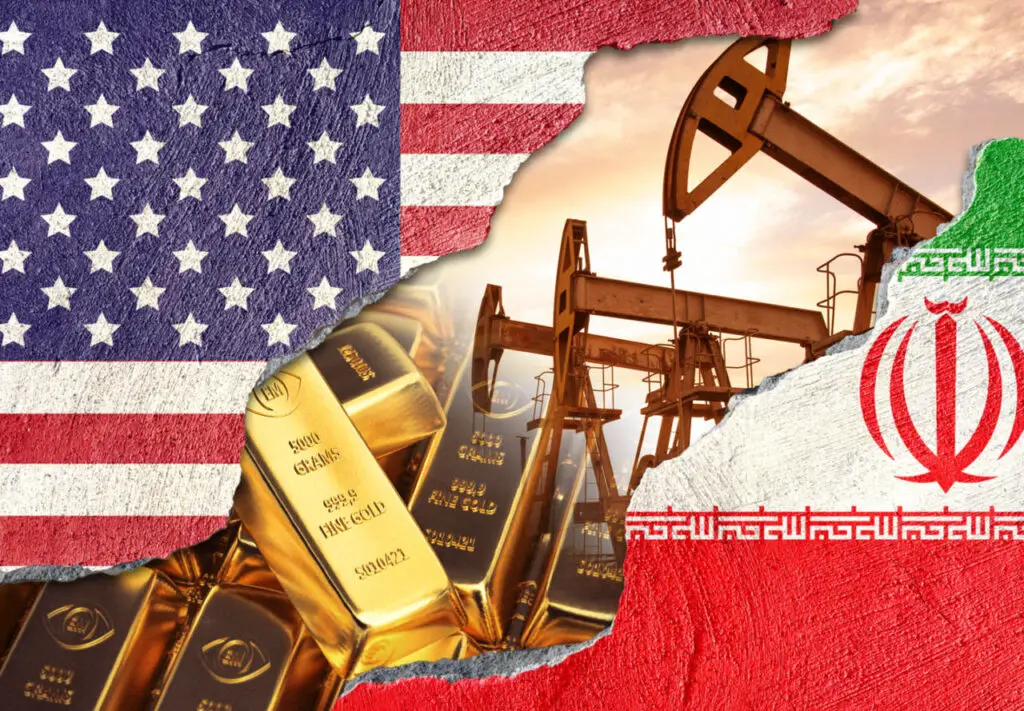

Gold and oil prices have a message for investors about Iran tensions
Silver: The Overlooked Shadow of Gold’s Rise
While gold has commanded headlines in recent months, its quieter cousin, silver, has been quietly building momentum of its own. Often referred to as “the poor man’s gold,” silver is anything but poor in utility or investment potential. And as geopolitical tension, central bank dynamics, and industrial demand collide in 2025, silver is beginning to assert itself—not just as a trailing hedge to gold, but as a unique, double-purpose asset riding two macro waves.
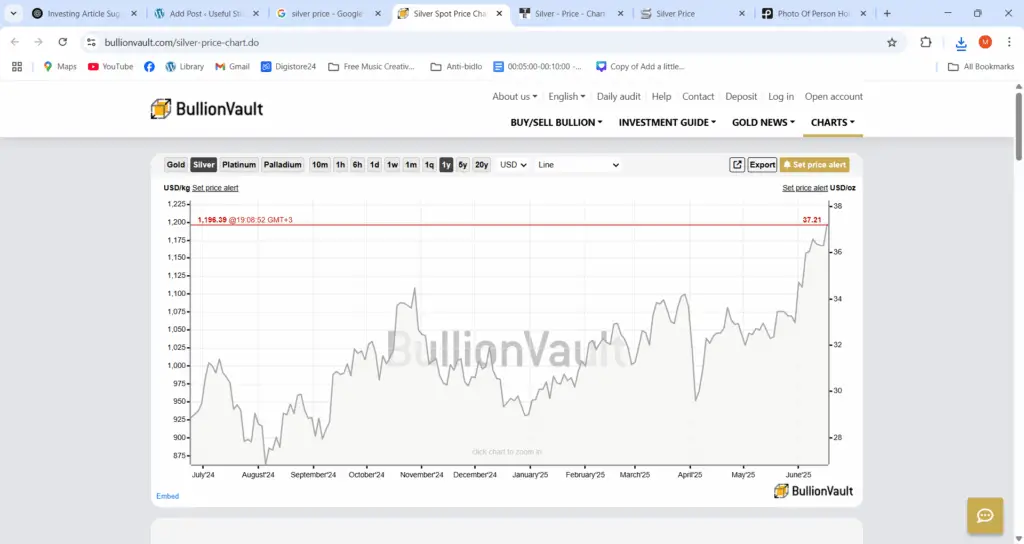
As of mid-June 2025, silver is trading near $42–$44 per ounce, having surged over 40% year-to-date. That’s roughly in line with gold’s 2025 performance, but the silver/gold ratio—which measures how many ounces of silver equal the price of one ounce of gold—still hovers near 80:1, far from the long-term historical average of 55–60. This suggests that despite the rally, silver remains undervalued relative to gold, at least by traditional standards.
The Dual Identity: Safe-Haven + Industrial Metal
What makes silver so compelling in 2025 is its unique hybrid role. Like gold, it is a monetary metal, often hoarded during periods of uncertainty. But unlike gold, silver has deep industrial utility—especially in clean energy sectors like:
- Solar panel manufacturing
- Electric vehicle circuitry
- 5G infrastructure
- Medical devices and sensors
As governments push green energy agendas, and as semiconductor and battery demand grows, industrial demand for silver continues to rise. The Silver Institute projects a 6% global deficit in physical silver this year, driven by both increased demand and reduced mining output .
When war drums beat or inflation flares, silver rises as a hedge. But when factories boom or energy technology scales, silver rides those waves too.
Why Silver Could Outperform Gold Later in 2025
Gold is largely a sentiment-driven metal—fear and monetary policy define its behavior. Silver, in contrast, is often slower to react, but when it does, its moves are steeper and more volatile. That’s because of its smaller market size, thinner liquidity, and wider use-case spectrum.
Here’s how that plays out:
- When gold is rising on central bank cuts or geopolitical risks, silver follows—albeit less smoothly.
- But when industrial output recovers—especially in China or India—silver can leapfrog gold’s pace.
- In historical gold bull markets (e.g., 2010–2011), silver has outperformed gold by 2× or more during the latter stages of the rally.
If, by Q3 or Q4, the global economy enters a “reflationary” boomlet—i.e., growth revives while rates drop—silver could surge past $50/oz, and possibly retest its 2021 highs near $60, especially if solar and EV sectors rebound strongly.
Investor Strategy: When and How to Play Silver
Silver is volatile. It has been called “gold on steroids” for a reason. In 2023, it dipped below $20; now it’s over $43. That kind of swing means timing and patience matter more than with gold.
A) Long-Term Accumulation
For investors who believe in the clean tech story and silver’s strategic role in a post-fossil world, physical silver or long-term ETFs like SLV, PSLV, or SILJ (miners) offer exposure. Just note that miners often lag in crisis periods.
B) Short-Term Traders
Traders look to breakout patterns, particularly if silver crosses and holds above $45–$46, a key resistance level. That opens the door to speculative runs toward $50–$52.
C) Silver/Gold Ratio Plays
More advanced investors monitor the XAU/XAG ratio, betting on silver outperforming gold as cycles mature. If the ratio falls from 80:1 to 65:1, and gold remains at $3,400, that implies silver at $52.30/oz.
Beyond Metals: What Gold and Silver Tell Us About the World
When both gold and silver rise in tandem—especially by 30–50% or more within a year—the message is clear: the world is uncertain.
It means trust in currencies is eroding.
-It means inflation is not fully tamed.
It means investors do not trust peace will hold.
It means paper assets feel vulnerable to monetary or systemic shocks.
This is where the metal story becomes more than charts or ratios—it becomes a social thermometer. It signals not just concern over events like the Israel–Iran crisis or the Fed’s next move, but a broader sense that the systems we rely on—energy, currency, policy, diplomacy—are in transition.
Investors, by buying gold and silver, are buying freedom from exposure. They’re buying optionality. And they’re buying silence—because metals do not default, do not issue press releases, and do not rely on trust. They simply sit in vaults and accumulate meaning when everything else feels like noise.
Final Forecast (Gold + Silver Combo Outlook)
Gold, as we saw earlier, is expected to trade between $3,200–$3,600 into year-end, with upside to $4,000 if conflict and rate cuts converge.
Silver, which has lagged behind in historical ratios, may move more erratically—but with far greater upside potential in bursts. Base forecasts point to $40–$50 by Q4, but if the industrial rebound coincides with Fed easing, prices could spike toward $55–$60.
Combined, these metals offer investors a dynamic hedge strategy:
- Gold as the steady reserve in crisis.
- Silver as the levered play on risk + recovery.
Closing Words
In a world where central banks improvise policy, geopolitics threatens oil lanes, and inflation eats quietly through savings, metals are no longer a fringe obsession—they’re a mainstream strategy. In 2025, gold is no longer just a hedge; it’s a message. Silver is no longer second-tier; it’s a signal.
And for the investor who reads the signs well, both may yet offer not only protection—but opportunity.