Bitcoin’s summer of 2025 was historic. After years of speculation, cycles, and institutional hesitation, the world’s most famous cryptocurrency surged to a new all-time high of around $124,000 in August 2025. For longtime holders, this milestone was both vindication and exhilaration.
But markets rarely move in straight lines. By early September 2025, Bitcoin had already pulled back to the $114K–115K range, raising familiar questions: Is this just healthy consolidation before another rally? Or the beginning of a deeper correction?
The answer matters not only to crypto enthusiasts, but also to retirement savers, hedge funds, and central banks. Bitcoin is no longer a fringe experiment — it’s a trillion-dollar asset shaping global financial debates.
How Bitcoin Reached $124K
Several drivers converged to push Bitcoin to its August peak:
- Institutional Adoption: Spot Bitcoin ETFs in the U.S. and Europe saw record inflows through mid-2025, drawing both retail and pension fund participation.
- Macroeconomic Tailwinds: With inflation sticky above 3% and the Federal Reserve signaling eventual rate cuts, investors sought alternatives to cash and bonds.
- Global Demand: Countries facing currency depreciation — notably in Latin America and parts of Asia — saw rising grassroots Bitcoin adoption.
- Narrative Momentum: “Digital gold” regained prominence as gold itself traded near $3,400/oz, reinforcing Bitcoin’s role as an alternative safe haven.
This mix of fundamentals and psychology created the perfect storm for a breakout.
Why Bitcoin Fell Back to $115K
By September, however, Bitcoin slipped about 8% from its peak. Several factors explain the pullback:
- Profit-Taking: After breaking new highs, many short-term traders cashed out.
- Technical Resistance: The $124K level proved a strong ceiling, as sellers overwhelmed buyers.
- Macro Uncertainty: While the Fed hinted at rate cuts, mixed economic data (particularly around employment and housing) made investors cautious.
- Regulatory Headlines: Ongoing debates in Washington over crypto taxation and exchange rules cooled enthusiasm.
Importantly, this decline is relatively modest by Bitcoin standards. In past cycles, peaks were followed by 20–40% corrections. That makes today’s consolidation look orderly rather than catastrophic.
The Technical Picture
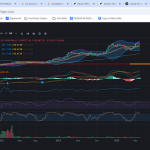
Chart watchers see a few key levels:
- Support: $110K–115K has emerged as a strong support zone.
- Resistance: $124K remains the immediate hurdle; a breakout above it could open a path toward $140K–150K.
- Momentum Indicators: Relative Strength Index (RSI) shows Bitcoin has cooled from “overbought” levels in August.
In other words, the technicals suggest a classic post-rally digestion phase.
Macro & Regulatory Forces in Play
Bitcoin’s trajectory from here will depend heavily on larger forces beyond the crypto world.
- Federal Reserve Policy
If the Fed follows through on rate cuts in late 2025 or early 2026, Bitcoin could benefit. Lower yields on bonds typically push investors toward risk assets.
- Inflation
Persistent inflation above 3%–4% strengthens Bitcoin’s “store of value” narrative. If inflation drops back below 2%, enthusiasm may cool.
- Regulation
The U.S. is still debating clearer rules for crypto exchanges, taxation of staking, and stablecoin oversight. A friendly regulatory framework could push Bitcoin higher, while crackdowns could dampen growth.
- Institutional Flows
ETF demand remains a critical driver. Sustained inflows indicate Bitcoin is becoming a mainstream allocation in portfolios — a sea change compared to five years ago.
Bitcoin and Gold: Parallel Safe Havens
Gold at ~$3,400/oz and Bitcoin at ~$115K are increasingly compared as twin hedges. The differences matter:
- Gold: centuries of history, stability, central bank backing.
- Bitcoin: finite supply, global portability, asymmetric upside.
Rather than one replacing the other, many investors are now holding both: gold for tradition, Bitcoin for growth. In 2026–2027, the narrative may shift from competition to complementarity.
Scenario Outlook for 2026–2027
Bullish Case: $150K–200K
- Inflation remains elevated.
- Fed eases aggressively.
- ETF flows stay strong.
- Institutional adoption broadens.
Result: Bitcoin breaks $124K decisively, climbs toward $150K or higher.
Base Case: $100K–140K Range
- Moderate inflation.
- Fed cautious.
- ETF flows stable but not explosive.
Result: Bitcoin consolidates in a wide range, frustrating both bulls and bears.
Bearish Case: $80K–100K
- Inflation falls to 2%.
- Dollar strengthens.
- Regulatory clampdowns intensify.
Result: Bitcoin corrects but still holds above prior cycle highs ($69K in 2021).
Risks Investors Must Watch
Even bullish investors must be mindful of risks:
- Volatility: 10–20% swings remain normal for Bitcoin.
- Regulatory Shocks: A hostile U.S. tax or exchange law could spook markets.
- Over-Leverage: Excessive derivatives trading sometimes sparks forced liquidations.
- Competition from CBDCs: If central banks push digital currencies, Bitcoin may face headwinds.
These risks don’t negate Bitcoin’s long-term case, but they shape the path.
Portfolio Strategy After $124K
For investors, the key question is not whether Bitcoin can hit $150K, but how much exposure is appropriate after such a run.
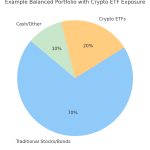
- Conservative Portfolios: 1–3% in Bitcoin, paired with gold and bonds.
- Balanced Portfolios: 5–10% allocation. Enough to benefit from upside without jeopardizing stability.
- Aggressive Portfolios: 10–20%+ for those who see Bitcoin as the primary store of value.
The principle remains: Bitcoin should be treated as a hedge and asymmetric bet, not the core of a retirement plan.
What This Means for 2026–2027 Investors
The real lesson of Bitcoin’s rise to $124K is that adoption has matured. A pullback to $115K is not the end of the story, but the beginning of a new phase.
- For holders: staying patient is often rewarded, as long as risk is sized properly.
- For new investors: consolidation phases like today are usually better entry points than euphoric peaks.
- For planners: Bitcoin should now be considered alongside gold, bonds, and equities in strategic asset allocation.
Thoughts
Bitcoin’s surge to $124K and its pullback to $115K are reminders that volatility remains, but the long-term trajectory is intact.
- If inflation stays sticky, adoption expands, and regulation stabilizes, Bitcoin could march toward $150K–200K by 2027.
- If conditions turn adverse, it could retrace toward $100K — still well above past cycles.
Either way, Bitcoin is no longer a niche bet. In 2026–2027, it is a central part of the global safe-haven conversation. The key is not predicting exact prices, but recognizing that Bitcoin has secured its place in portfolios — with risks, yes, but also with unmatched potential.
Historical Patterns: What Past Cycles Tell Us
Bitcoin’s history is full of dramatic peaks and painful corrections, but the cycles share common features:
- 2013 Cycle
- Price surged from ~$100 to over $1,100, then fell more than 80%.
- Driven by early adoption and speculation.
- Lesson: parabolic rallies are often followed by brutal resets.
- 2017 Cycle
- Bitcoin rose from ~$1,000 to nearly $20,000, fueled by retail mania.
- Crash back to ~$3,000 tested patience.
- Lesson: each cycle brings broader adoption, but volatility persists.
- 2021 Cycle
- Hit ~$69,000 in November 2021.
- Then fell ~75% to ~$16,000 by late 2022 during crypto scandals and Fed tightening.
- Lesson: macroeconomic policy and leverage now play bigger roles.
- 2025 Cycle (current)
- Surged past all previous highs, touching ~$124K in August.
- Pullback to ~$115K appears modest compared to earlier cycles.
- Lesson: as Bitcoin matures, corrections may become shallower — but risk remains.
👉 Looking ahead, if history rhymes, Bitcoin could face another significant correction at some point before the next major rally. The difference now: institutional support provides a stronger floor than in past cycles.
Bitcoin vs. Traditional Assets in 2026–2027
- Stocks
- Correlation with equities has risen, particularly during risk-off events.
- However, Bitcoin can diverge if inflation rises — investors see it as “hard money.”
- Bonds
- U.S. Treasuries offer yields again (4–5%).
- But bonds are tied to Fed policy; Bitcoin operates outside that system.
- Gold
- Gold has been the historical safe haven; Bitcoin is its digital counterpart.
- Some portfolios now split hedge allocations between the two.
👉 In 2026–2027, Bitcoin’s relative strength will depend on whether it is viewed as risk-on speculation or risk-off hedge. Right now, it straddles both worlds.
Investor Psychology: The $100K Threshold
Crossing $100,000 was more than a technical milestone — it was psychological. Humans anchor to round numbers, and in markets, these thresholds act as magnets.
- At $124K, excitement peaked. Social media buzz and ETF inflows surged.
- At $115K, fear creeps back in: “Is the top already in?”
Investor psychology will shape the next leg:
- If confidence returns, Bitcoin could test $140K–150K.
- If fear dominates, a retrace toward $100K could shake out weak hands.
Adoption Trends: Beyond Speculation
For Bitcoin to sustain above $100K, adoption must go beyond ETFs and speculation. Signs of this are emerging:
- Merchants and Payment Rails: Lightning Network and stablecoin integrations make Bitcoin more usable in commerce.
- Sovereign Adoption: El Salvador remains the headline, but other emerging economies are studying Bitcoin strategies.
- Corporate Treasuries: Some companies continue allocating a percentage of reserves to Bitcoin, echoing the playbook of MicroStrategy.
If these adoption trends strengthen in 2026–2027, Bitcoin’s safe-haven narrative will deepen.
Forward-Looking Risks
Beyond the well-known volatility, several risks loom:
- Regulatory Overreach
- Excessive taxation or restrictions on Bitcoin ETFs could dampen demand.
- Stablecoin regulations might indirectly affect Bitcoin liquidity.
- Technological Threats
- Although unlikely in the near term, advances in quantum computing could spark security debates.
- Competing blockchains with faster transactions may siphon attention.
- Environmental Scrutiny
- Bitcoin mining remains energy-intensive. If climate regulations tighten, miners could face cost pressures.
- Over-Concentration of Holders
- A handful of whales and institutions now hold significant amounts of Bitcoin. Large moves could destabilize price action.
Portfolio Case Studies
To make Bitcoin’s role clearer, let’s look at how different investors might incorporate it in 2026–2027.
Retiree Investor (Age 65)
- Portfolio: 60% bonds, 30% stocks, 10% alternatives.
- Bitcoin Allocation: 2–3%.
- Goal: modest hedge against inflation, without jeopardizing retirement stability.
Growth-Oriented Investor (Age 40)
- Portfolio: 50% stocks, 30% bonds, 10% gold, 10% Bitcoin.
- Bitcoin Allocation: 10%.
- Goal: growth potential and crisis hedge balance.
Aggressive Hedge-Seeker
- Portfolio: 40% stocks, 20% bonds, 20% gold, 20% Bitcoin.
- Bitcoin Allocation: 20%.
- Goal: ride long-term appreciation, accept volatility.
Scenario Table: Bitcoin 2026–2027
| Scenario | Price Range | Triggers | Investor Takeaway |
| Bullish | $150K–200K | Sticky inflation, Fed easing, strong ETF inflows, adoption growth | Maintain/expand exposure |
| Base | $100K–140K | Mixed inflation, cautious Fed, stable ETF flows | Expect consolidation, rebalance |
| Bearish | $80K–100K | Falling inflation, strong dollar, regulatory crackdowns | Reduce exposure, hold long-term core |
Final Thoughts
Bitcoin’s pullback from $124K to $115K is not a collapse — it’s a pause. History shows that corrections are part of the cycle, but each cycle lifts Bitcoin to higher plateaus.
- If macro conditions align, Bitcoin could climb toward $150K–200K by 2027.
- If risks dominate, it may retrace to $100K or below — still above old highs.
- Either way, Bitcoin has cemented itself as a serious asset alongside gold, bonds, and equities.
For investors in 2026–2027, the lesson is clear: treat Bitcoin as a strategic allocation, not a speculative bet. Its volatility remains, but so does its long-term promise.