Introduction: The Safer Way to Invest in Crypto?
Cryptocurrency investing has long been a high-reward, high-risk game. For most investors, especially those closer to retirement or with larger portfolios, direct exposure to Bitcoin, Ethereum, and other altcoins feels like walking a financial tightrope. Volatile swings, regulatory surprises, and exchange failures have scared off many cautious participants.
Enter the Crypto ETF.
By 2025, crypto ETFs have matured into one of the most accessible and regulated ways to gain exposure to digital assets—without needing to manage wallets, private keys, or exchanges. With the U.S. SEC approving multiple spot Bitcoin ETFs in early 2024, institutional interest has surged, and new ETF products are hitting the market rapidly.
But with over a dozen options now available, which crypto ETFs are actually worth watching (or buying) in 2025 and into 2026?
This guide breaks down the top 3 crypto ETFs that stand out for performance, stability, and long-term potential.
What Is a Crypto ETF (and Why Should You Care)?
A cryptocurrency exchange-traded fund (ETF) is a regulated financial instrument that allows investors to buy into crypto-related assets through their traditional brokerage accounts—just like buying a stock or S&P 500 ETF.
Crypto ETFs typically fall into one of three categories:
- Spot ETFs – hold the actual asset (e.g. Bitcoin or Ethereum)
- Futures ETFs – trade contracts based on future prices
- Thematic or blockchain ETFs – invest in companies involved in crypto or blockchain technology
Key Benefits for Investors:
- Simplicity: Buy and sell within your existing portfolio
- Regulation: Issued by trusted financial institutions
- Custody Risk Reduced: You don’t have to manage wallets or worry about exchange hacks
- Tax Advantages (in some jurisdictions): ETFs may be eligible for retirement accounts like IRAs
In 2025, the crypto ETF market is finally mature enough to offer serious options for both retail investors and institutions. But not all ETFs are created equal.
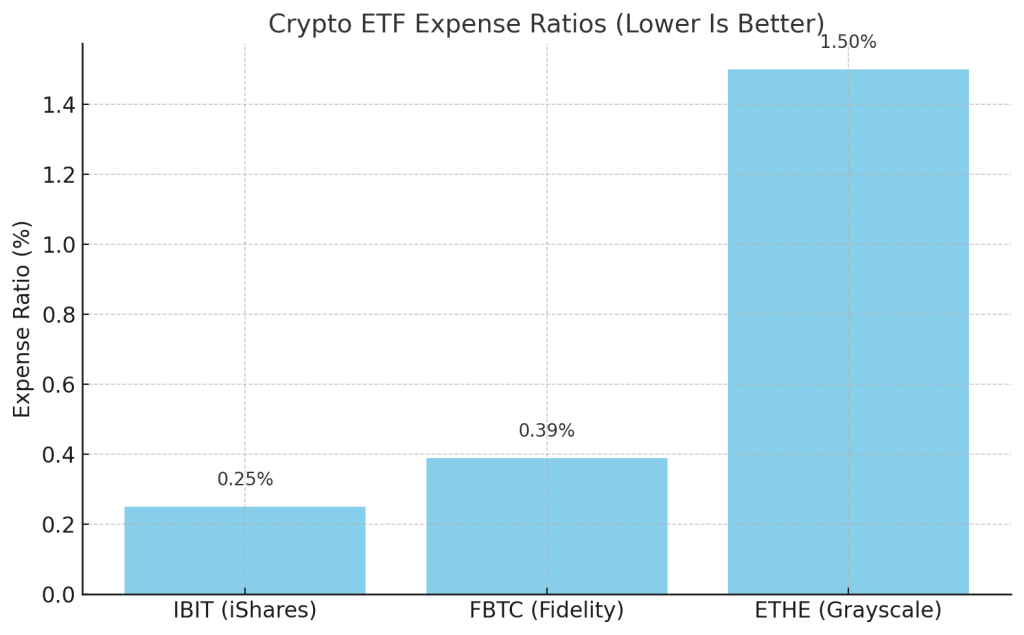
Here is the first chart: Crypto ETF Expense Ratios (Lower Is Better).
It visually compares the fee structure of IBIT, FBTC, and ETHE — helping readers understand cost differences between major crypto ETFs.
Next, we’ll break down the top 3 ETFs worth watching now — and why each one stands out.
1. iShares Bitcoin Trust (IBIT) – The Institutional Favorite
Launched: January 2024
Provider: BlackRock
Type: Spot Bitcoin ETF
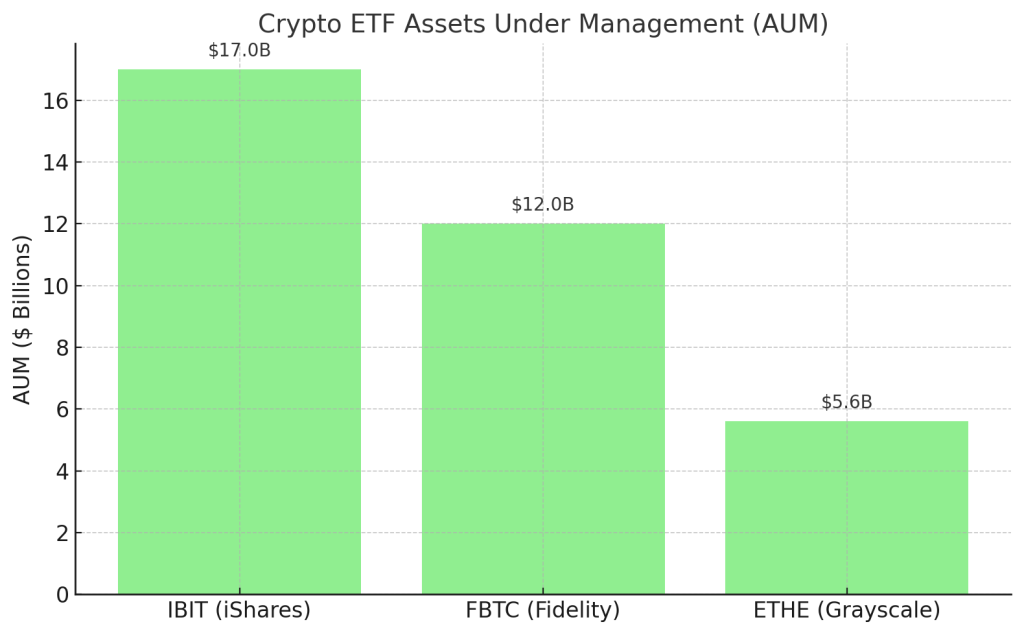
Assets Under Management (AUM): Over $20 billion (as of mid-2025)
Ticker: IBIT
BlackRock’s iShares Bitcoin Trust has quickly become the largest and most trusted Bitcoin ETF in the world. It holds actual Bitcoin in cold storage and provides direct exposure to BTC price movements—without the hassle of private keys or wallets.
Why It Stands Out:
- Backed by BlackRock, the largest asset manager globally
- Low fees (0.25% management fee)
- High liquidity and tight spreads, making it ideal for large trades
- Has helped push Bitcoin into 401(k) portfolios and institutional pension funds
IBIT is often considered the benchmark ETF for Bitcoin exposure in 2025, and it has become a safe starting point for serious investors.
2. Grayscale Ethereum Trust (ETHE) – The Ethereum Pioneer
Launched: Converted to ETF structure in 2025
Provider: Grayscale Investments
Type: Spot Ethereum ETF
Assets Under Management: $6+ billion
Ticker: ETHE
Grayscale, which previously dominated the institutional trust market, successfully converted ETHE into a spot ETF after the SEC approved Ethereum ETFs in early 2025.
Why It’s Important:
- First major Ethereum-focused ETF
- Offers pure exposure to ETH, including staking rewards in future iterations
- Appeals to investors bullish on Ethereum 2.0, DeFi, and Web3 adoption
While it has higher fees (around 0.50%), ETHE captures growth potential beyond Bitcoin, making it ideal for those looking to diversify within crypto.
3. Bitwise Crypto Industry Innovators ETF (BITQ) – Equity-Based Diversification
Launched: 2021
Provider: Bitwise Asset Management
Type: Thematic Equity ETF
AUM: ~$1.2 billion
Ticker: BITQ
Unlike IBIT or ETHE, BITQ doesn’t hold crypto assets directly. Instead, it invests in publicly traded companies involved in the crypto industry: exchanges (Coinbase), miners, hardware providers, and blockchain developers.
Why Some Investors Prefer It:
- Lower volatility than holding crypto directly
- Strong exposure to crypto innovation without regulatory uncertainty
- Includes profitable businesses like Nvidia (through crypto chip exposure), which also ride AI/tech tailwinds
BITQ performs well when crypto markets are rising, but it may hold up better during downturns, making it attractive to conservative or balanced investors.
Here is the second chart: Crypto ETF Assets Under Management (AUM)
It shows which ETFs have attracted the most capital — a key trust and adoption signal for investors.
Choosing the Right Crypto ETF for Your Portfolio
While all three ETFs offer exposure to the digital asset market, they serve very different purposes. Here’s a quick breakdown of how they compare:
| ETF | Exposure Type | Primary Asset | Risk Level | Ideal For |
| IBIT | Spot ETF | Bitcoin | Medium–High | Long-term Bitcoin believers, institutional-style portfolios |
| ETHE | Spot ETF | Ethereum | High | Growth-focused investors, Ethereum ecosystem fans |
| BITQ | Equity ETF | Crypto companies | Medium | Balanced investors, those preferring stock-based exposure |
Key Insight:
If you’re looking for direct exposure to BTC with the backing of a trusted institution, IBIT is hard to beat.
If you believe Ethereum’s role in DeFi, NFTs, and smart contracts will outperform Bitcoin’s store-of-value role, ETHE provides that growth engine.
And if you want indirect exposure through the stock market while avoiding crypto’s wild swings, BITQ offers a safer bet.
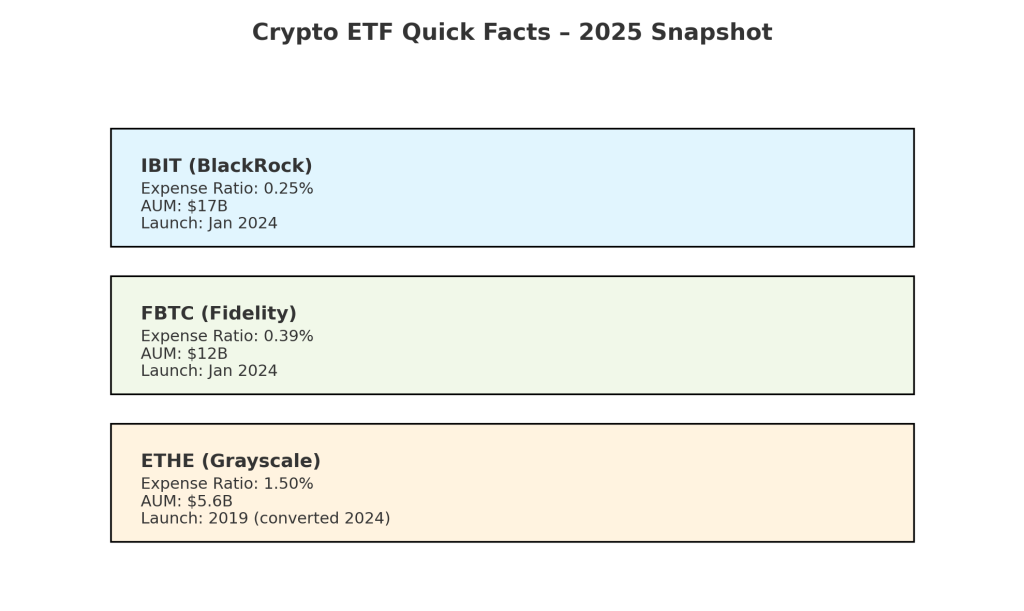
Here is the first infographic: Crypto ETF Quick Facts – 2025 Snapshot
It summarizes the top 3 ETFs by provider, fee, AUM, and launch year — great for visual comparison in the article.
Why Crypto ETFs Matter in 2025–2026
The rise of spot ETFs marks a turning point in crypto adoption. Investors who were once wary of opening exchange accounts or transferring tokens can now participate via their traditional broker or retirement account.
In fact, crypto ETFs are:
- Appearing in 401(k) and Roth IRA portfolios
- Considered inflation hedges by younger investors
- Being recommended by financial advisors with regulatory clarity increasing
While crypto itself remains volatile, ETFs create a bridge between the traditional finance world and the blockchain future.
Final Thoughts: Should You Invest Now?
Crypto ETFs aren’t risk-free — Bitcoin and Ethereum still swing wildly, and regulation continues to evolve. But for 2025–2026, these instruments represent the safest, cleanest, and most tax-efficient way to invest in crypto for most retail and retirement investors.
If you’re bullish on digital assets but want less chaos and more control, a crypto ETF might be your best move.
How Different Types of Investors Use Crypto ETFs
Crypto ETFs aren’t one-size-fits-all. Depending on your age, risk tolerance, and investing goals, you’ll approach them differently. Let’s explore how three different investor profiles might incorporate crypto ETFs into their portfolios.
1. Young Investor (Age 25–35): Growth-Focused
- Strategy: Allocate 10–15% of total portfolio to IBIT and ETHE
- Rationale: At this age, higher volatility is acceptable in exchange for greater upside
- Execution: Dollar-cost averaging via Roth IRA or brokerage account
- Diversification: Uses BITQ for equity-based exposure + core S&P ETF holdings
Goal: Maximize long-term upside from digital assets while building a diversified core
2. Mid-Career Professional (Age 40–55): Balanced Risk
- Strategy: Allocates 5–8% of portfolio to IBIT (Bitcoin ETF), small stake in ETHE
- Rationale: Growing concern for retirement + inflation hedge
- Execution: Includes crypto ETFs in IRA or 401(k) using trusted fund providers
- Diversification: Holds gold ETF, cash reserves, dividend stocks
Goal: Protect capital with measured growth exposure to crypto through regulated channels
3. Retiree (Age 60+): Capital Preservation with Optional Upside
- Strategy: Conservative allocation: 2–4% in IBIT or BITQ
- Rationale: Seeks inflation hedge and non-correlated asset exposure, but limits volatility
- Execution: Tax-advantaged accounts, automatic rebalancing yearly
- Diversification: Larger holdings in bonds, TIPS, dividend stocks, physical gold
Goal: Use crypto ETFs to hedge fiat devaluation risk without major downside exposure
Are ETFs Better Than Holding Crypto Directly?
For most mainstream investors, yes — especially in 2025–2026.
Let’s compare the pros and cons:
| Aspect | Crypto ETFs | Direct Crypto Holdings |
| Security | High – managed by custodians like Coinbase or Fidelity | Medium to Low – depends on user security |
| Convenience | Easy to buy/sell via broker or retirement account | Requires wallet setup and self-management |
| Regulation | Fully regulated, SEC-approved (IBIT, ETHE) | Unregulated, peer-to-peer networks |
| Tax Reporting | Simplified – broker issues 1099 forms | Complex – especially for frequent trades |
| Ownership | Indirect – no private keys or chain access | Direct blockchain ownership and control |
While hardcore crypto enthusiasts prefer direct custody and decentralization, the ETF model offers a user-friendly, legally compliant, and low-friction entry point — ideal for mass adoption.
Pro Tip: Balance Crypto ETFs with Traditional Safe-Havens
To manage volatility and avoid overexposure, many investors in 2025 are balancing their crypto ETF holdings with:
- Gold ETFs like GLD or IAU — protects against systemic risk
- Treasury ETFs like TLT — hedge interest rate swings
- Cash-equivalent ETFs like BIL — maintain liquidity
- Dividend stock ETFs for passive income
This helps create a resilient portfolio capable of weathering both crypto crashes and fiat-driven inflation.
Global Momentum: Crypto ETFs Are Going Mainstream, Fast
While the U.S. made headlines with the approval of spot Bitcoin ETFs in early 2024, the trend is rapidly spreading across the globe in 2025.
- Europe: Countries like Germany, Switzerland, and Sweden already offer regulated crypto exchange-traded products (ETPs) that mirror U.S. ETFs in function.
- Asia: Japan and South Korea are warming to crypto ETFs, especially those tied to Ethereum and gaming-related tokens.
- Middle East: The UAE is building crypto ETF infrastructure aimed at high-net-worth individuals and sovereign funds.
- Australia and Canada: Were among the earliest to adopt Bitcoin ETFs and continue to expand offerings with high liquidity and institutional access.
Even central banks are beginning to take note. In countries with high inflation — such as Argentina or Turkey — regulated crypto ETF access is seen as a lifeline to financial preservation.
The takeaway? Crypto ETFs are not just a U.S. experiment — they’re a global investment trend accelerating with every regulatory breakthrough.
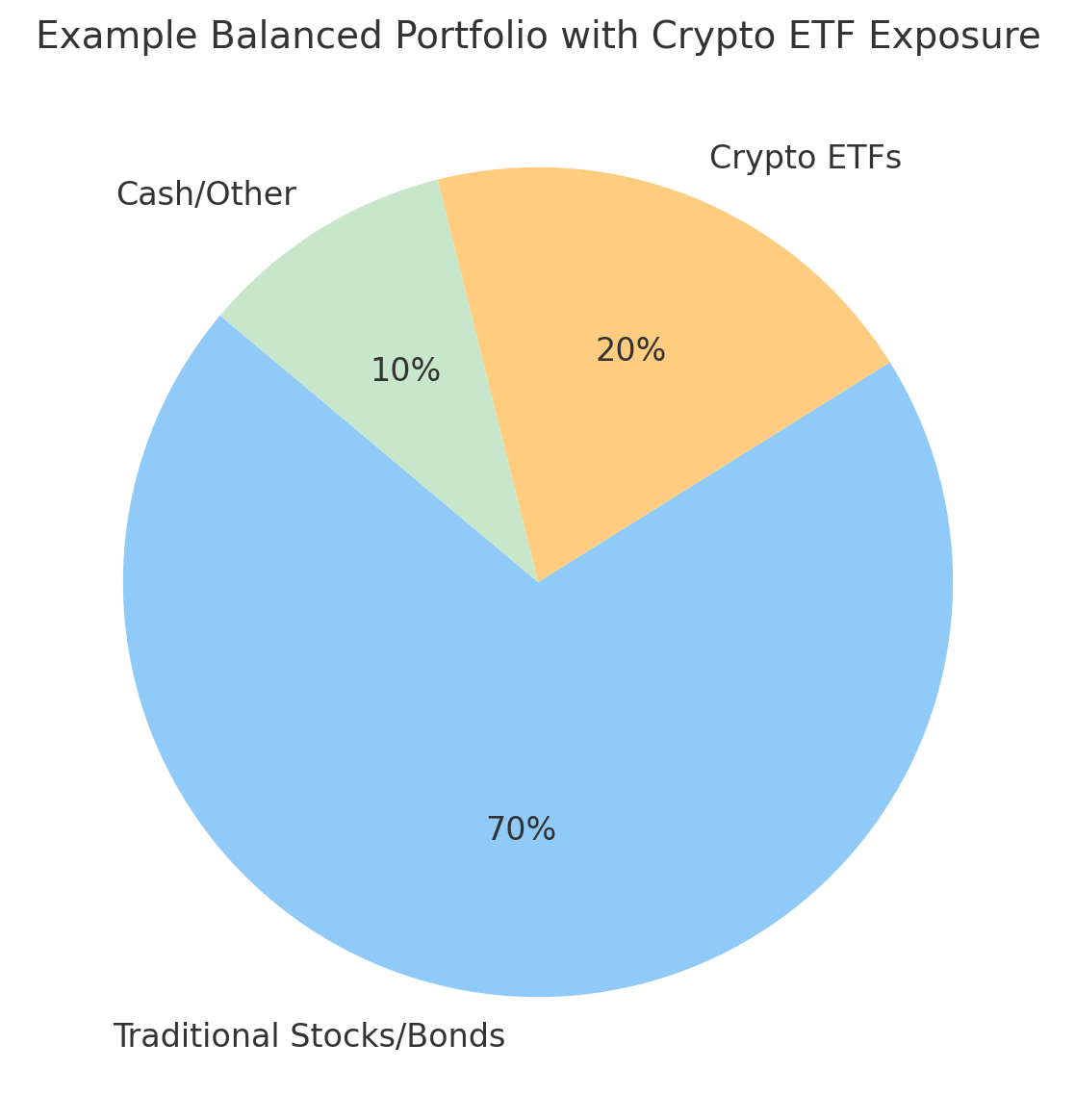
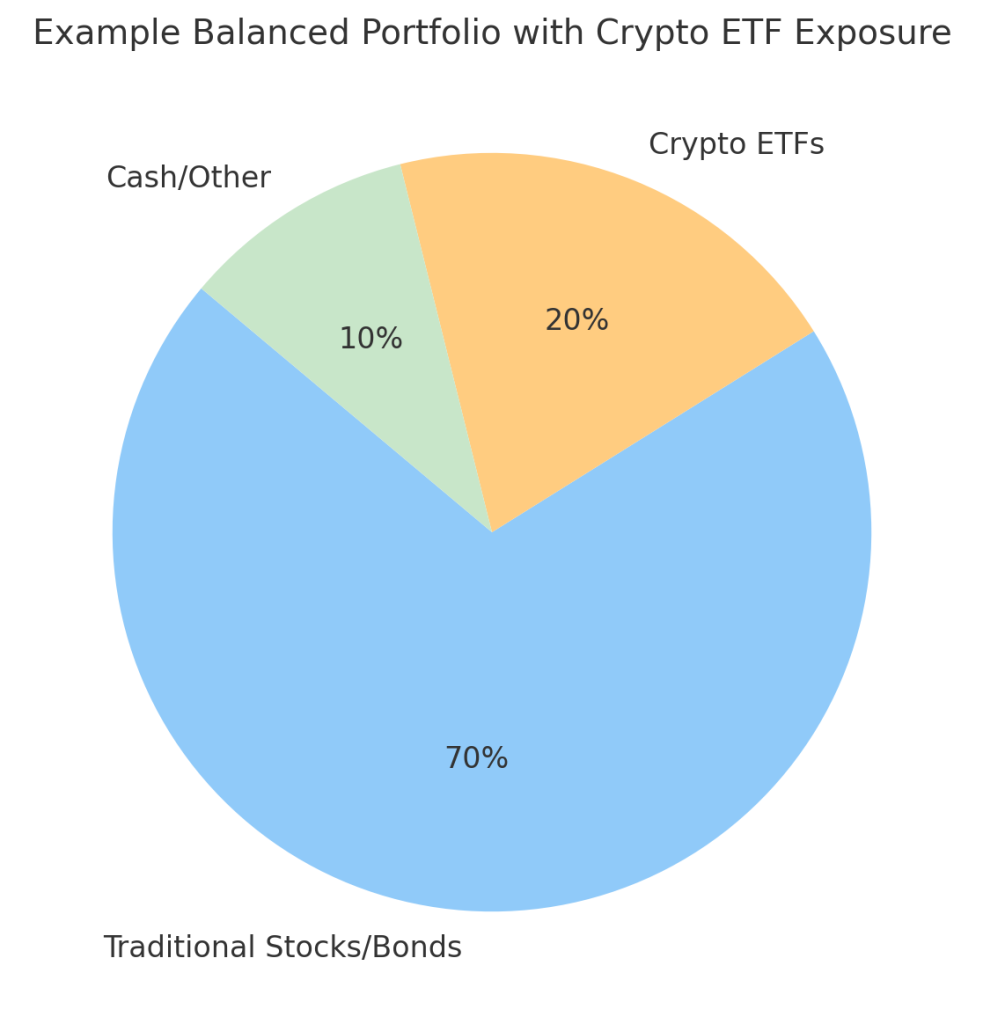
Here is the second infographic: Example Balanced Portfolio with Crypto ETF Exposure
It demonstrates a common 70/20/10 allocation model — traditional assets + crypto ETFs + cash — helping readers visualize a lower-risk approach to crypto investing.
But Crypto ETFs Aren’t for Everyone
Despite their appeal, not everyone should jump into crypto ETFs. These products are still inherently tied to volatile underlying assets, and certain investors may want to reconsider or approach with caution.
Here are a few cases where crypto ETFs may not be appropriate:
1. Short-Term Traders
Crypto ETFs often don’t perfectly track the real-time movements of the underlying coins. If you’re looking to trade hourly or daily price swings, direct crypto exposure on an exchange may be better suited than an ETF.
2. All-in Crypto Believers
If your philosophy is rooted in self-sovereignty and decentralization, you may prefer holding actual Bitcoin or Ethereum in cold storage. ETFs introduce intermediaries and regulatory dependencies, which some purists reject.
3. Extremely Risk-Averse Retirees
Even at 1–3% of portfolio exposure, crypto ETFs can introduce emotional stress to investors who are already anxious about volatility. For such individuals, gold, dividend stocks, or TIPS may offer better peace of mind.
In short, ETFs simplify access, but they don’t eliminate risk. You still need to assess your time horizon, financial goals, and psychological comfort before investing — even in a regulated format.
The Future of Crypto Investing Is Regulated and Mainstream
What started as a fringe, code-based digital experiment is now entering traditional financial infrastructure. Crypto ETFs like IBIT, ETHE, and BITQ are the clearest sign that Bitcoin and Ethereum are no longer speculative sidelines — they are part of the core investing conversation.
In 2025–2026, investors who adopt wisely — not recklessly — will be best positioned for the next wave of financial transformation.
Crypto ETFs Are the Bridge to a New Financial Era
As crypto continues its evolution from fringe technology to mainstream financial asset, crypto ETFs represent a powerful bridge — offering regulated access, reduced risk, and simplified exposure for a wide range of investors.
They’re not for everyone. Traders chasing hourly volatility or purists demanding full decentralization will still prefer direct crypto custody. But for the vast majority of retail and retirement investors — especially those seeking diversification, inflation protection, and ease of use — ETFs provide a meaningful way to participate in the digital asset revolution without the operational headaches.
With top providers like BlackRock, Fidelity, and Grayscale leading the charge — and governments around the world warming to regulatory frameworks — crypto ETFs aren’t just a trend. They’re part of a permanent transformation in global investing.
In 2025–2026, the smart strategy isn’t about going all in or staying out. It’s about knowing how to use these tools responsibly, proportionally, and with clear long-term goals. Done right, crypto ETFs can become one of the most valuable additions to a modern portfolio.