
Bitcoin (BTC) has built a global reputation on two things: explosive growth and painful crashes. Since its inception, the world’s most prominent cryptocurrency has undergone multiple dramatic boom-and-bust cycles. This volatility has become almost predictable—every euphoric bull market is followed by a deep correction, and often, a brutal crash.
So, the pressing question for 2025 and beyond is: when is the next time Bitcoin will most likely crash? While no one can predict the exact day or hour, we can look at patterns in Bitcoin’s historical behavior, macroeconomic triggers, and current market conditions to make an informed forecast.
A Look Back: Bitcoin’s Predictable Unpredictability
Over the past decade, Bitcoin has crashed several times—each time wiping out 60% to 85% of its market value. Here are a few key moments:
- 2013 to 2015: BTC dropped from $1,100 to around $200
- 2017 to 2018: a fall from nearly $20,000 to $3,000
- 2021 to 2022: after reaching ~$69,000, it collapsed below $20,000
These crashes weren’t random—they followed periods of intense speculation, media hype, and retail buying frenzies. Once market sentiment peaked and early whales began to sell, the cascade began. Understanding this cycle is key to anticipating future crashes.
The 2024 Halving: Is the Top Already In?
The most recent Bitcoin halving event occurred in April 2024, slashing mining rewards and theoretically reducing future supply. Historically, halvings have been followed by major bull runs, as was the case in 2013, 2017, and 2021. But in 2025, things look different.
BTC has risen since the halving—but far more modestly than in previous cycles. Many analysts believe the halving’s effects were “priced in” early. If that’s the case, and if the post-halving rally runs out of steam soon, the next crash could begin in late 2025 or early 2026—mirroring the timing of prior cycle tops and corrections.
Macro Triggers: What Could Set Off the Next Crash?
Several macroeconomic and geopolitical factors could trigger Bitcoin’s next nosedive:
- Rising interest rates: High rates drain liquidity and reduce investor risk appetite.
- Recession fears: Economic instability tends to drive capital to safer assets like cash or gold, not Bitcoin.
- Stock market corrections: BTC often correlates with tech stocks—if the Nasdaq crashes, Bitcoin could follow.
- Regulatory crackdowns: News of new restrictions on exchanges, stablecoins, or DeFi could spark panic.
The crypto market doesn’t need a massive black swan event to crash—it just needs a combination of fear, leverage, and uncertainty.
Leverage: The Hidden Fuel of Every Crash
One of the most underestimated threats in the crypto market is leverage. With many traders borrowing heavily to amplify their gains—sometimes 10x, 50x, or even 100x—Bitcoin’s price becomes increasingly sensitive to sharp movements.
When the price dips suddenly, margin calls and liquidations kick in. Traders are forced to sell assets to cover losses, which triggers more selling, pushing prices lower in a vicious feedback loop. This is how a small dip can turn into a full-blown crash.
In past collapses, such as May 2021 or November 2022, billions of dollars were wiped out in just hours due to cascading liquidations. As of 2025, leverage remains high on many exchanges, especially in Asia and offshore platforms. This suggests that even a modest correction could spark a major wipeout.
Technical Warning Signs: What the Charts Say
While technical analysis (TA) doesn’t predict the future with certainty, it can offer valuable insights into when market sentiment may be shifting. Key signals to watch for include:
- Breakdown of support levels — If BTC drops below key supports like $52,000 or $45,000 with strong volume, it could signal further downside.
- Bearish chart patterns — Double tops, head and shoulders formations, or descending triangles often precede sharp corrections.
- Declining volume on rallies — Weak buying interest during price increases may indicate that the bull trend is losing strength.
These signals don’t guarantee a crash—but when they align with other warning signs (like negative news or macro stress), the risk becomes serious.

Investor Psychology: Boom, Bust, Repeat
One of the most consistent drivers of Bitcoin crashes is investor psychology. The typical cycle includes:
- Optimism: Smart money accumulates quietly.
- Euphoria: Public frenzy, media hype, FOMO.
- Anxiety: Volatility increases. “Is this the top?”
- Denial: Early drops are dismissed as “healthy pullbacks.”
- Panic: Sharp sell-offs accelerate. Retail exits.
- Capitulation: Massive losses. Everyone sells.
- Despair: Market bottoms. No one cares about BTC anymore.
These emotional waves repeat every few years. Right now, in 2025, we appear to be somewhere between euphoria and anxiety. If history repeats—and it often does in crypto—the next panic could be triggered in the next 6–12 months.
So… When Will Bitcoin Crash Next?
No one can give you an exact date. But by combining past cycles, current signals, and broader financial trends, here’s a reasonable projection:
- Late 2025 to mid-2026 appears to be the highest-risk period for a crash.
- If BTC reaches new all-time highs of $100,000–$110,000 (and it already reached $108,000), the risk of a sharp reversal increases dramatically.
- If macro conditions worsen or a regulatory bombshell hits, the crash could happen sooner.
So… When Will Bitcoin Crash Next?
Bitcoin has already surged past $107,000 in 2025, surprising many analysts who expected more modest gains after the 2024 halving. With this new all-time high already in the books, the market is now deep in speculative territory—which historically has preceded major corrections.
Given this, a reasonable projection would be:
- Anytime between now and mid-2026 could trigger a crash, especially if macro pressure builds or retail sentiment flips.
- A pullback of 30%–50% is not unusual after extreme rallies in Bitcoin. From $107,000, that could mean a fall to the $70,000–$50,000 range.
- The higher Bitcoin climbs without a correction, the sharper the crash may be.
For now, investors should treat every new all-time high with caution, watching for signs of waning momentum, rising leverage, or tightening liquidity. While no one can time the exact top, the risk of a severe downturn grows with every euphoric push higher.
Ultimately, Bitcoin’s next crash isn’t a question of if—it’s a question of when. And for those paying attention, the warning signs will likely appear in advance.
Early Warning Signs of a Bitcoin Crash
While predicting the exact moment Bitcoin will crash again is impossible, investors can monitor a few reliable early indicators:
1. Sharp Increase in Leverage
When open interest and funding rates on crypto futures exchanges like Binance or Bybit spike significantly, it suggests that traders are betting heavily on price moves using borrowed money. This leverage can cause a cascade of liquidations if BTC’s price dips even slightly — triggering a flash crash.
2. Surging Retail Hype
Massive inflows from new, inexperienced investors — often fueled by viral content on TikTok, Reddit, or YouTube — tend to occur near market tops. In past cycles, heightened interest from casual retail traders (especially with little risk management) often preceded major drawdowns.
Signs of this include:
- Bitcoin becoming the #1 trending term on Google or Twitter
- Celebrities and influencers promoting crypto again
- Explosive price rallies in meme coins and NFTs
3. Institutional Profit-Taking
Many large holders (like hedge funds and ETFs) don’t chase hype — they cash out when retail enthusiasm gets frothy. If Glassnode, CryptoQuant, or similar blockchain analytics tools show that long-term wallets are distributing coins to newer buyers, that’s often a smart money exit signal.
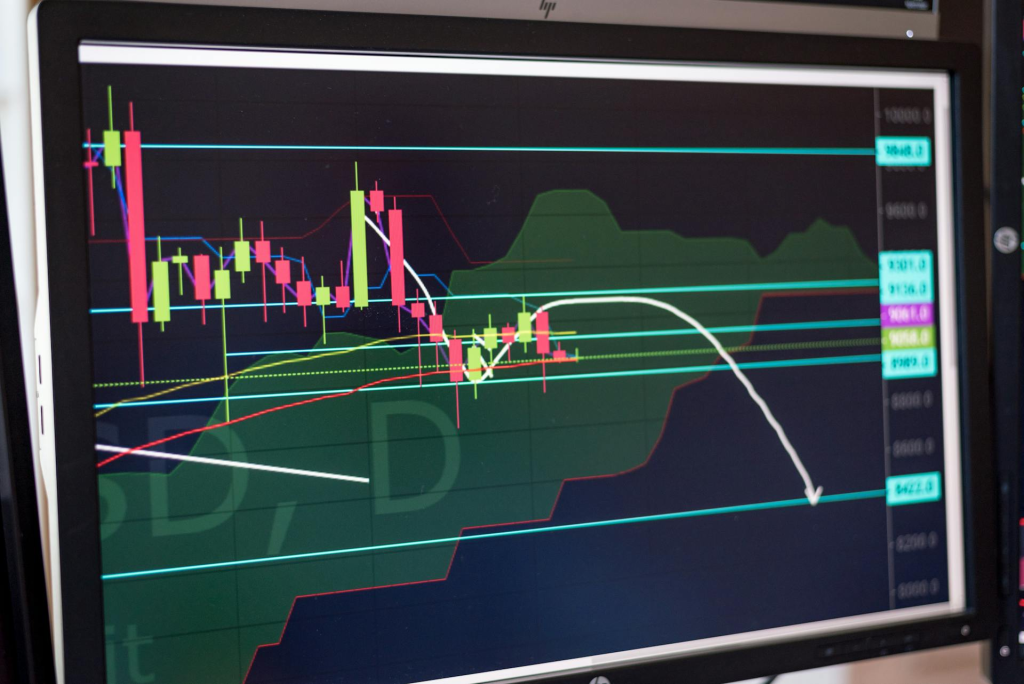
Potential Crash Catalysts in 2025–2026
Here are the most realistic scenarios that could spark a sudden drop in Bitcoin’s price over the next 12–18 months:
⚠️ A Hawkish Federal Reserve or ECB
If interest rates are raised again in response to stubborn inflation, liquidity will tighten across all asset classes. Bitcoin, despite its long-term thesis as “digital gold,” usually trades like a risk asset and tends to fall when monetary policy turns restrictive.
⚠️ Major Regulatory Action
A new wave of regulation — especially in the U.S., Europe, or Asia — could freeze sentiment and cause a rush for the exits. For instance:
- A ban on stablecoins like USDT or USDC
- SEC enforcement actions against centralized exchanges
- Strict capital gains or transaction taxes on crypto
⚠️ Whale Sell-Off or ETF Rebalancing
Large holders or ETFs may need to rebalance portfolios after a parabolic BTC run. This could result in billions of dollars worth of Bitcoin being sold in a short timeframe.
⚠️ A Security Vulnerability
Although unlikely, any technical flaw in the Bitcoin protocol or related layer-2 infrastructure (like the Lightning Network) could rapidly undermine trust and valuation.
What If the Crash Never Comes?
Some optimists argue that Bitcoin may no longer crash as severely as in the past. Here’s why:
- The market is more mature, with institutional infrastructure (like ETFs, custodians, and derivatives).
- Miners are more geographically decentralized.
- Retail investors are better educated than in 2017 or 2021.
- Bitcoin has become a strategic macro asset in some sovereign portfolios (e.g., El Salvador).
Still, even mature markets correct — just look at the S&P 500 or NASDAQ. While BTC may not drop 85% again, a 30–50% correction is still likely, and potentially healthy in the long run.
Is It Too Late to Buy Bitcoin?
Many retail investors are asking: “Bitcoin is already at $100,000 — am I too late?”
Not necessarily. If you believe in Bitcoin’s long-term fundamentals, these are some key ideas to consider:
- Dollar-Cost Averaging (DCA): Instead of trying to time tops or bottoms, invest a small amount weekly or monthly to reduce risk from market swings.
- Wait for a Dip: If history repeats, a crash will offer better entry points. Just be emotionally prepared to act during peak fear.
- Use BTC as a Hedge, Not a Bet: Treat Bitcoin as part of a diversified portfolio — not an all-or-nothing gamble.
What to Do Before the Next Bitcoin Crash
If you already hold BTC, here’s how to prepare before the next big drop:
- Set Price Alerts and Stop-Losses
If you’re actively trading, define your risk levels. Setting stop-loss orders around support zones (like $85K or $72K) could help prevent major capital loss. - Take Some Profits at Key Levels
It’s okay to secure some gains. You don’t have to sell everything — just enough to reduce risk if the market turns. - Review Exchange Risk
Avoid storing large amounts of BTC on centralized exchanges. Use hardware wallets like Ledger or Trezor for long-term storage. - Diversify Your Crypto Portfolio
Don’t put everything into BTC. Spreading capital across assets like Ethereum, stablecoins, or even traditional safe havens (gold, bonds, cash) can reduce your downside. - Stay Emotionally Detached
It’s hard, but important: Bitcoin is volatile. The worst decisions happen when emotions take over — panic selling near bottoms, or overbuying near tops.
Final Thoughts: When Is the Next Crash Most Likely?
If Bitcoin mirrors previous bull cycles, the odds of a correction increase significantly after reaching euphoric highs — like the $107,000 milestone.
Some analysts believe Q4 2025 to Q2 2026 is a danger zone, especially if:
- BTC hits $120K+
- Leverage peaks
- Macroeconomic risks intensify
- Retail euphoria returns
That doesn’t mean a crash is guaranteed. But smart investors know: risk grows in bull markets, not bear ones.
So… Will Bitcoin crash again?
Probably. The real question is whether you’ll be prepared when it does.
Note: under the favorable circumstances Bitcoin crash may be a long-lasting correction before reaching new highs.