As the U.S. economy teeters on the edge of a potential downturn, many investors are asking:
What happens to Bitcoin if the U.S. enters a recession in 2026? Will it behave like a safe haven, a speculative tech stock, or something else entirely?
Bitcoin’s behavior during economic slowdowns is still an emerging story. But by analyzing past market reactions, macroeconomic conditions, and evolving investor psychology, we can draw informed expectations about how Bitcoin may perform in the event of a U.S. recession in 2026.
Bitcoin and Recessions: What History Suggests
Bitcoin has never experienced a full-blown U.S. recession in a mature economic and regulatory context. While it existed during the 2020 COVID-19 crash and the brief 2022–2023 banking instability, both were unique episodes dominated by short-term panic and Fed intervention. The 2008 recession occurred before Bitcoin even launched.
Here’s what we do know:
- March 2020: Bitcoin briefly crashed alongside equities and gold in the early COVID panic, dropping more than 50% in two days — then rebounding rapidly as liquidity flooded markets.
- 2022: During high inflation and rising interest rates (but not a technical recession), Bitcoin fell significantly, tracking the NASDAQ more closely than gold.
So far, Bitcoin has behaved more like a risk-on tech asset during times of economic stress — not a defensive hedge like gold or cash.
Recession in 2026: Key Macro Factors to Watch
If a U.S. recession hits in 2026, the market context will matter more than the recession itself. Some major factors to consider:
- Federal Reserve Policy Response
The Fed’s response will be crucial. If it:
- Cuts rates aggressively, Bitcoin could benefit from renewed risk appetite and liquidity inflows.
- Keeps rates high to fight inflation or protect the dollar, Bitcoin may struggle as liquidity tightens.
Bitcoin thrives in easy-money environments with low interest rates, but tends to suffer when real yields are rising.
- Investor Sentiment: Inflation vs. Deflation
Will the 2026 recession be stagflationary (high inflation, low growth), or deflationary (falling prices and demand collapse)?
- If inflation persists, Bitcoin may attract those fleeing fiat debasement.
- If we enter deflation, investors may prefer cash or Treasuries over volatile assets.
Bitcoin’s value proposition as “digital gold” becomes more convincing during currency crises and inflationary recessions — not during deflationary spirals where capital preservation dominates.
Bitcoin’s Potential Paths During a 2026 Recession
Scenario 1: Recession with Fed Easing → Bullish for Bitcoin
- Liquidity returns to the market.
- Risk assets rally.
- Bitcoin decouples from stocks and leads a new cycle.
This is the most bullish scenario, especially if institutional adoption continues and Bitcoin is viewed as a macro hedge.
Scenario 2: Recession with Tight Fed Policy → Neutral to Bearish
- Investors flee to cash, T-bills, and defensive assets.
- Bitcoin may drop or stagnate, similar to 2022.
- Volatility increases as traders struggle to price future Fed pivots.
This is a more likely scenario if inflation remains sticky, forcing the Fed to prioritize price stability over growth.
Scenario 3: Recession with Systemic Crisis → Wild Card
- A black swan event (e.g., major bank collapse or sovereign debt crisis) hits.
- Bitcoin could either:
- Drop sharply if liquidity dries up, or
- Rally sharply if trust in traditional finance erodes.
In this scenario, Bitcoin’s core thesis as an alternative monetary system could shine — but timing would be difficult to predict.
What Can Investors Do to Prepare?
No one knows for sure if the U.S. will fall into a recession in 2026 — or how markets will react if it does. But prudent Bitcoin investors can take strategic steps now to manage risk and maximize opportunity.
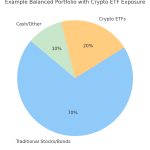
- Diversify Your Portfolio
Don’t go all-in on any one asset, especially something as volatile as Bitcoin. If Bitcoin has taught us anything, it’s that drawdowns can be brutal — often exceeding 50% in a matter of weeks. By balancing your holdings between:
- Bitcoin and other crypto assets
- Precious metals (gold, silver)
- Dividend-paying stocks
- Cash or short-term Treasuries
…you’re less likely to panic sell or miss opportunities. Bitcoin may be a great asymmetric bet, but it shouldn’t be your only bet — especially heading into a recession.
- Monitor On-Chain and Macro Indicators
Keep an eye on key signals like:
- Bitcoin’s hash rate (miner confidence)
- Exchange balances (are whales accumulating?)
- Inflows/outflows from ETFs
- Federal Reserve meeting outcomes and CPI/inflation data
- Yield curve and Treasury market
Combining on-chain data with macro trends offers a more complete picture than price action alone.
- Have a Plan for Volatility
Bitcoin is infamous for whipsaw moves — and volatility may rise in a recession, not fall. Create a plan now for how you’ll respond if:
- BTC drops 30–50%
- BTC breaks new all-time highs
- BTC decouples from stocks
Will you buy more? Rebalance? Take profits? Stay in? A pre-defined plan keeps emotion out of the equation when volatility spikes.
Bitcoin’s Maturing Role in Global Finance
The 2026 recession could mark a turning point for Bitcoin — depending on how it behaves when tested by real-world financial stress. For over a decade, Bitcoin has evolved from a fringe experiment into a trillion-dollar asset class. But its role in the financial system remains fluid.
In the past, Bitcoin was:
- A speculative trade
- A libertarian ideal
- A technological curiosity
Now it’s becoming:
- A recognized digital asset
- An institutional-grade investment
- A hedge against monetary dysfunction (for some)
In a recession, Bitcoin may face one of two destinies:
- It collapses with other risk assets — proving it’s still too immature and speculative for real-world portfolio protection.
- It holds or rises — signaling a growing perception that Bitcoin is a new form of digital store of value.
Which path it takes depends largely on macro conditions, monetary policy, and whether enough investors are prepared to buy the dip and hold for the long term.
Bitcoin vs. Other Assets in a Recession: What History Suggests
To fully grasp what could happen to Bitcoin in a 2026 recession, it helps to compare how other major assets have historically responded to economic downturns — and where Bitcoin may fit into that narrative.
Stocks: Deep Volatility, Then Recovery
The S&P 500 typically drops anywhere from 20% to 50% during major recessions. In the 2008 global financial crisis, it plummeted more than 50%. In the 2020 COVID-19 crash, it dropped 34% in one month — then rallied quickly due to central bank stimulus.
Historically, equities rebound sharply once the recession bottoms out — but timing that bottom is difficult. Investors often sell too late or re-enter too early.
Gold: Slow but Steady Hedge
Gold has often been considered a hedge in uncertain times, and during many recessions, it has held or gained ground:
- In 2008, gold initially dropped with markets (as investors scrambled for cash), but it quickly rebounded and soared over the next 2–3 years.
- In 2020, gold surged to $2,070/oz amid the pandemic panic and stimulus surge.
However, gold’s moves tend to be less dramatic and often slower to react than stocks or crypto.
Bonds: Not Always Safe
Traditionally, government bonds (especially U.S. Treasuries) have been go-to safe-haven assets during recessions. In 2008, they outperformed almost everything else. But that hasn’t been the case in recent years:
- In 2022–2023, rising inflation caused the bond market to suffer its worst drawdown in history.
- In future recessions, especially if inflation remains sticky, bonds might not offer the same protection they once did.
Bitcoin: Uncharted Territory
Bitcoin has never been tested in a classic prolonged recession with inflation, job losses, and negative growth. In 2020, the recession was short-lived, and Bitcoin thrived in the liquidity boom that followed.
But what if the next recession isn’t followed by easy money? What if the Fed can’t cut rates aggressively due to inflation risks?
In that scenario, Bitcoin’s behavior is less predictable. It could either:
- Fall with risk assets, like tech stocks
- Or become a new hedge, rising as trust in fiat currencies weakens
This is the central tension: Bitcoin has never had to prove itself during a real recession with persistent inflation and tight money. That’s what makes 2026 such a pivotal moment.
What If the Recession Doesn’t Happen?
While many analysts warn that a U.S. recession is inevitable by 2026 — especially after prolonged interest rate hikes and global instability — it’s also possible that the economy avoids contraction altogether.
- Soft landing scenario: Growth slows, but inflation falls, and the Fed manages a smooth transition to lower rates.
- Re-acceleration: Consumer demand picks up, tech innovation drives productivity, and recession risks fade.
In this case, Bitcoin could benefit for different reasons:
- Lower interest rates could spark another liquidity-driven crypto rally.
- Continued adoption by institutions and ETFs would push more capital into Bitcoin.
- The 2024 halving effect may still be playing out, historically associated with bull runs 12–18 months later.
So whether a recession occurs or not, Bitcoin could find reasons to either drop or surge — depending on how investors interpret the broader macro narrative.
That’s why flexibility and preparation are key. A rigid belief in only one outcome (e.g., recession = bullish for BTC) may prove dangerous in a complex market.
Final Thoughts: Preparing for Bitcoin’s Role in the Next Economic Downturn
A 2026 recession could become one of Bitcoin’s most important historical tests.
For over a decade, Bitcoin has grown in popularity, price, and institutional acceptance — but always in an era of liquidity abundance, ultra-low interest rates, and speculative optimism. If a true economic downturn arrives, especially one marked by inflation, tight credit, or global instability, Bitcoin may either:
- Emerge stronger as a decentralized store of value that’s immune to monetary debasement
- Or face crippling volatility as risk-averse investors pull out of speculative assets in favor of safety and income
The reality may be somewhere in between — and outcomes could vary across timelines:
- Short term (0–6 months into a recession): Expect volatility, panic selling, and correlation with equities.
- Medium term (6–18 months): If inflation lingers or government trust erodes, Bitcoin could regain traction as a digital hedge.
- Long term (2+ years): Adoption patterns, regulatory clarity, and macro trends will shape whether Bitcoin becomes a permanent fixture in global finance or remains a speculative niche.
For investors, this means preparation over prediction. Bitcoin should not be your only hedge — but it may be a valuable piece of a diversified recession strategy. Dollar-cost averaging, stop-loss orders, portfolio rebalancing, and education are key tools to navigate uncertainty.
Whether the 2026 recession proves mild or historic, one thing is clear: Bitcoin’s role in the global economy is no longer hypothetical. The next economic cycle will help define whether BTC matures into digital gold — or simply reflects the same risk profile as the tech stocks it was supposed to replace.