As the global economy enters a period of shifting interest rates, rising inflation fears, and geopolitical uncertainty, investors face a tough question:
Should I invest in Bitcoin or real estate?
Both are seen as long-term stores of value. Both have passionate believers. And both have performed incredibly well—depending on when you bought.
But in 2025–2026, the landscape is different. Home prices are slowing or correcting in many regions, while Bitcoin is rebounding from its last cycle low.
This article compares the pros, cons, and future outlook of Bitcoin and real estate across six key areas—so you can decide which fits your investment strategy better.
📊 1. Historical Returns: A Tale of Two Booms
- Bitcoin: Since 2011, Bitcoin has delivered unmatched returns—over 1,000,000% in total. Even with extreme drawdowns, it has outpaced nearly all other asset classes over a 10–12 year span.
- Real Estate: U.S. real estate has historically returned 3–5% annually after inflation. In hot markets (e.g. Austin, Phoenix, Miami), prices surged 30–50% post-COVID, but are now correcting.
Verdict: Bitcoin wins on raw returns, but volatility makes timing crucial. Real estate offers steadier growth and leverage opportunities.
🏠 2. Tangibility and Use
- Bitcoin: A purely digital asset. You can’t live in it, rent it out, or physically possess it. But it’s borderless, portable, and increasingly accepted.
- Real Estate: A tangible, functional asset. You can live in it, rent it, or build equity over time. However, it requires maintenance, taxes, and local market knowledge.
Verdict: Real estate offers more functional utility, especially if you plan to live in or monetize it.
💰 3. Liquidity
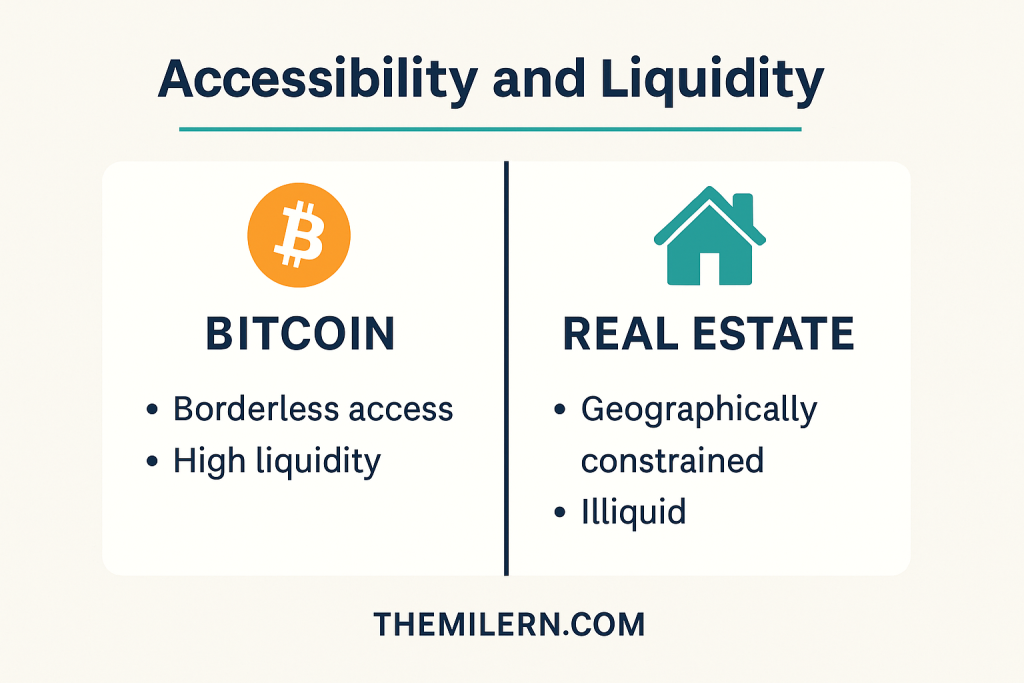
- Bitcoin: Highly liquid. You can sell 24/7, in any country, for any amount. No brokers, escrow, or weeks of waiting.
- Real Estate: Illiquid. Selling a property can take weeks or months, often with high fees and market risk.
Verdict: Bitcoin is the clear winner in liquidity, which matters in emergencies or fast-changing markets.
📉 4. Volatility and Risk
- Bitcoin: Known for volatility—price swings of 20–60% in a few weeks are normal. It crashed over 75% in 2022, then rallied over 100% in 2023–2024.
- Real Estate: Generally more stable, especially in long-term primary markets. But interest rates, regulations, and local supply-demand can cause sharp corrections.
Verdict: Real estate is less volatile. Bitcoin offers more upside—but with emotional and financial risk.
🧾 5. Taxes, Regulation, and Ownership Complexity
- Bitcoin: Taxed as property in many countries. You must track every transaction. Unclear regulatory outlook in places like the U.S.
- Real Estate: Can benefit from mortgage interest deductions, 1031 exchanges (U.S.), and depreciation. But property taxes and landlord laws vary by region.
Verdict: Real estate has more tax benefits today. Bitcoin has simpler ownership (no agents or escrow), but uncertain legal status.
📈 6. Outlook for 2025–2026
- Bitcoin:
- Tailwinds: Halving in 2024, ETF flows, institutional adoption.
- Risks: Regulatory clampdowns, network centralization, market cycles.
- Real Estate:
- Tailwinds: Demographic demand, rental income, wealth preservation.
- Risks: High interest rates, affordability crisis, declining prices in overheated markets.
🔍 7. Accessibility and Barriers to Entry
- Bitcoin: Anyone with a smartphone and internet connection can buy Bitcoin. Minimum investment can be just a few dollars. Platforms like Coinbase, Binance, and Cash App make access easy—even for beginners.
- Real Estate: Requires significant capital upfront—typically tens of thousands for a down payment, closing costs, and maintenance. You may also need good credit and approval from lenders.
Verdict: Bitcoin is far more accessible for younger investors and those with limited starting capital. Real estate is more exclusive.
🌐 8. Global Portability and Freedom
- Bitcoin: Can be transferred globally in minutes. Perfect for expats, digital nomads, or citizens of countries with currency instability. No need to deal with borders, banks, or physical limitations.
- Real Estate: Tied to a single location. If the political or economic climate deteriorates, your capital is trapped or at risk.
Verdict: Bitcoin offers sovereign-grade portability, while real estate is location-locked.
🤝 9. Passive Income and Cash Flow
- Bitcoin: Does not produce income on its own. However, some platforms offer staking or yield (with risk). Most BTC investors rely on price appreciation.
- Real Estate: Can generate monthly rental income. With proper management, it can become a passive cash-flow engine—especially for retirees or FIRE investors.
Verdict: Real estate is stronger for income-focused investors. Bitcoin is a capital appreciation vehicle.
📉 10. Risk Management and Downside Scenarios
Every investment carries risk—but the type of risk differs greatly between Bitcoin and real estate:
- Bitcoin Risks:
- Volatility: Bitcoin can lose 30–60% of its value in a matter of months. If you’re not emotionally prepared, you might sell at the worst possible time.
- Regulation: While regulation is maturing, uncertainty still surrounds crypto laws in many countries. A sudden ban or tax policy shift could hurt prices.
- Security: Self-custody comes with responsibility. One wrong click or lost password, and your crypto could be gone forever.
- Market Sentiment: Social media hype and media panic can drive huge swings—both up and down.
- Real Estate Risks:
- Illiquidity: Real estate is slow to sell. If you need cash fast, you’re stuck.
- Local Market Crashes: Property values can plummet due to regional events—economic downturns, job losses, natural disasters, or changing demographics.
- Tenant Risk: Rental properties can turn into headaches if tenants don’t pay or damage the unit.
- Interest Rates: Mortgage payments can skyrocket in a rising-rate environment, eating into profits or causing defaults.
✅ How to Manage These Risks:
- For Bitcoin:
- Keep position sizes small (1–5% of portfolio).
- Use cold storage for security.
- Avoid leverage and speculation.
- Focus on long-term trends, not daily noise.
- For Real Estate:
- Diversify locations.
- Build an emergency fund for repairs/vacancies.
- Consider REITs for more liquidity.
- Refinance strategically when rates are favorable.
Both assets require different kinds of discipline. Crypto demands emotional control and technical awareness. Real estate needs hands-on management and strategic planning.
🕰️ 11. Long-Term Performance & Inflation Protection
When choosing between Bitcoin and real estate, many investors ask: Which one protects better against long-term inflation and preserves purchasing power?
Bitcoin: A Digital Hedge with Explosive Potential
- Limited Supply: Bitcoin’s cap of 21 million coins gives it built-in scarcity, which many compare to digital gold.
- Post-2020 Inflation Hedge: During 2020–2022, as central banks printed trillions, Bitcoin surged. It outperformed nearly all other assets in response to monetary debasement.
- Long-Term CAGR: Despite drawdowns, Bitcoin has delivered over 100% compound annual growth rate (CAGR) from 2013–2023.
- Halving Cycles: Every 4 years, Bitcoin issuance is cut in half, which historically drives major bull cycles and supply-demand imbalances.
Still, Bitcoin hasn’t yet been tested during a prolonged global inflation crisis like the 1970s—making it promising, but not proven.
Real Estate: The Classic Inflation Shield
- Hard Asset: Land and property are tangible and finite. Over decades, real estate has tracked or exceeded inflation in most developed markets.
- Rent Increases: Rental income often rises with inflation, offering a natural income adjustment mechanism.
- Mortgage Advantage: In an inflationary environment, fixed-rate mortgages become easier to repay in “cheaper” dollars.
- Wealth Builder: U.S. home prices have doubled every 10–20 years on average, depending on the region.
However, property taxes and maintenance costs also inflate, cutting into real returns. And leverage cuts both ways—amplifying losses during crashes or interest rate spikes.
🌐 12. Accessibility, Liquidity, and Global Use
When evaluating Bitcoin vs. real estate, practical concerns matter just as much as investment theory. How easily can you enter, exit, and use these assets?
Bitcoin: Borderless, Liquid, 24/7
- Global Accessibility: Anyone with internet access can buy Bitcoin — from a teenager in Brazil to a retiree in Germany. No banks, lawyers, or brokers required.
- 24/7 Liquidity: Unlike real estate, which takes weeks or months to sell, Bitcoin can be traded instantly on hundreds of exchanges, 365 days a year.
- Low Minimum Investment: You don’t need $100,000 — you can start with $10. This makes Bitcoin more inclusive for small investors worldwide.
- Cross-Border Freedom: Bitcoin is portable. You can hold it in a hardware wallet and move across borders with your entire net worth in your pocket or your memory (via seed phrase).
- Downside: The ease of entry also means exposure to scams, unregulated platforms, and emotional overtrading. Security and discipline are crucial.
Real Estate: Tangible but Tied to Location
- Geographically Constrained: Real estate is rooted in a specific jurisdiction. Investing abroad involves complex legal, tax, and regulatory hurdles.
- Illiquid: Selling a property can take weeks or months. In downturns, prices often fall before buyers appear.
- High Barrier to Entry: You typically need tens or hundreds of thousands of dollars for down payments, closing costs, and maintenance reserves.
- Local Knowledge Needed: Neighborhood trends, zoning laws, and taxes vary widely. You can’t just “Google it” — boots-on-the-ground knowledge matters.
For investors seeking fast access, flexibility, and borderless control, Bitcoin has a significant edge. But for those prioritizing stability, tangibility, and long-term wealth storage, real estate still holds strong appeal.
✅ Final Thoughts: Which One Is Better?
It’s not a matter of Bitcoin vs. real estate—but rather what you want from your investments:
| Goal | Better Option |
| High returns with high risk | Bitcoin |
| Stability and income | Real Estate |
| Fast liquidity | Bitcoin |
| Tangible use and control | Real Estate |
| Borderless, future-proof asset | Bitcoin |
| Tax optimization and leverage | Real Estate |
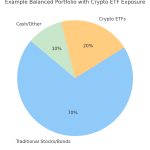
For many modern investors, a mix of both is ideal. A diversified portfolio might include 5–10% Bitcoin for upside, and real estate for stability and cash flow.
Bitcoin gives you speed, freedom, and explosive growth potential. Real estate gives you shelter, rental income, and proven durability through generations.
In 2025–2026, successful investing may come down to balance, not bias. Those who embrace the strengths of both may find themselves better prepared for a changing world.